Hey man, groove on us with your parents’ greenbacks – Teen Titans Subscription Ad
A couple of months ago I posted a look at a Teen Titans comic that made a painful attempt at connecting with the younger set. Pat at Silver Age Comics had a lot of the same impressions of that particular issue in a post that he made two days ago. So what ad do I see while I’m flipping through an old book yesterday? This one:
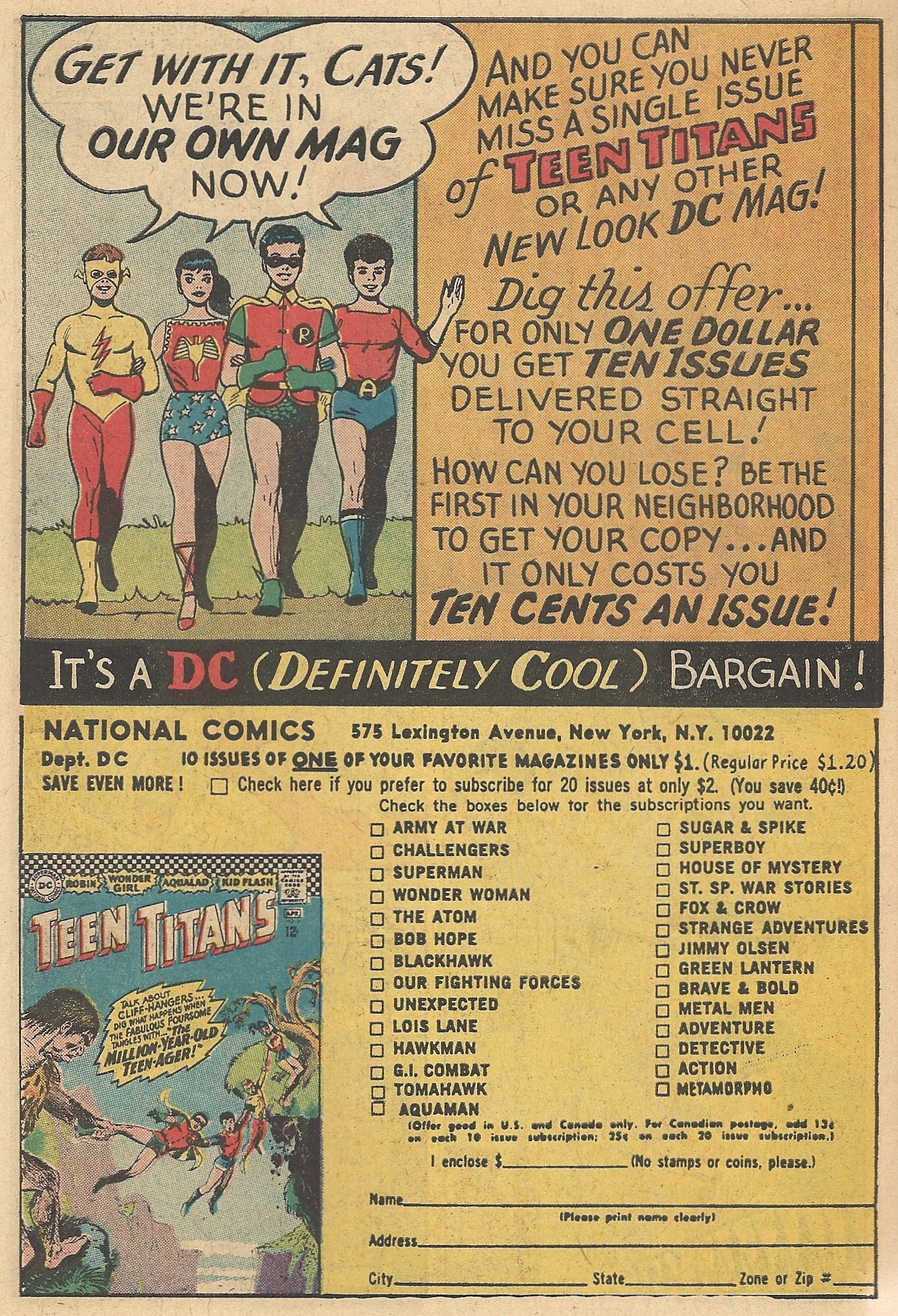
The stars have come together. The moon is in the seventh hour. Jupiter has aligned with Mars. If this isn’t the dawning of the Age of Aquarius, it’s at least the dawning of the Age of Unhip Hip Talk.
I have to admit, “straight to your cell” is a new one for me.
Yeah, but can he fly? – The Life of Pope John Paul II

This is a strange little comic, though I suppose the Pope is an appropriate subject for the medium. He has a direct line to the most powerful being in the universe, he’s a head of state much like Doctor Doom, and he wears a red cape. He fits right in.
I’m not a Catholic, but I certainly bear no malice to Catholicism or those who practice the faith. And I hold no grudge against John Paul II — he always seemed like a decent enough person. That all needs to be said. So if any Catholics read this and find me insufficiently reverent, please don’t pray for my eternal damnation.
The story (written by Steven Grant, pencilled by John Tartaglione, and inked by Joe Sinnott) is told from the perspective of a reporter who covers the Pope. Kind of a specific beat, but okay. The comic is bookended by a Mass that the Pontiff celebrates at Yankee Stadium in 1979. In between that we see the highlights of Karol Wojtyla’s life — his youth, his time as an actor, his entry into clergy, his experiences under the Nazis and Communism. All along he’s portrayed as the most wonderful human being who ever lived. That’s not hyperbole. Seriously. He’s depicted as nothing less than goodness personified, never uttering a cross word, never wearing any expression other than one of calm benevolence.
It really goes over the top when the story returns to that mass at Yankee Stadium. The reporter is disgusted by some young punks in the crowd:
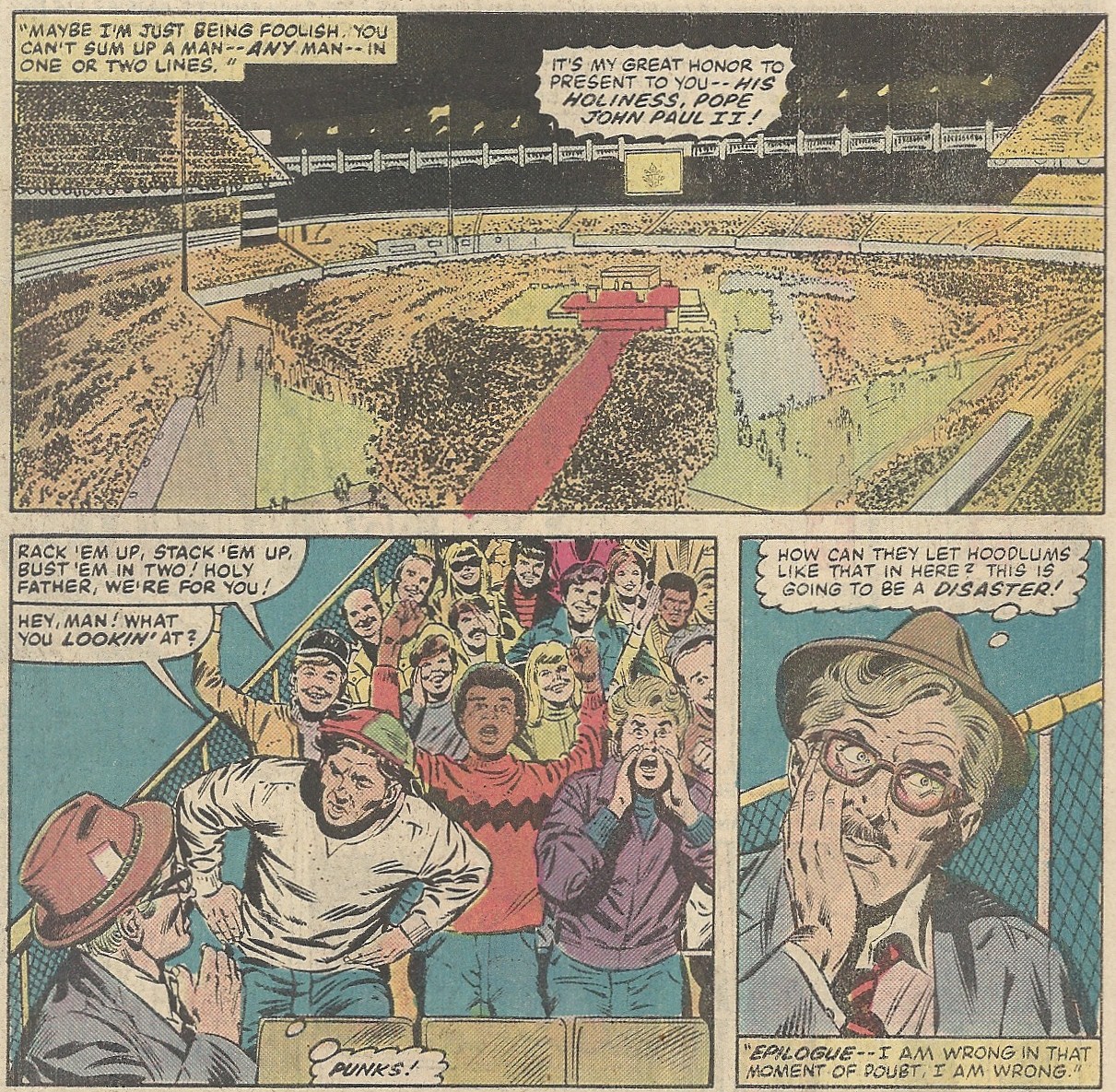
I didn’t realize that papal Masses could have bleacher bums. “Hey! Pope! You suck!” But fear not, because all John Paul II has to do is speak, and evils are righted and hearts opened:

This life story strays too far into hagiography for my tastes. It’s not odd to me that such a thing exists, but it does strike me as a little strange that it would come from Marvel Comics. Those of us looking for an explanation are in luck, though — the comic actually has a page on how this book came about:

Even with that background it’s still a little too heavy on the adulation for my blood. Then again, I guess that they couldn’t have gone in this direction:

The face that launched a thousand sh-… wait, that’s a different chick from antiquity – Classics Illustrated #161, “Cleopatra”

I bought this book mainly for the cover. I’m not at all familiar with the “classic” by H. Rider Haggard that this comic is based on. Never heard of it, though I’m very much aware of his Allan Quatermain series. The content inside is a bit tepid — I look forward to a little more from a tale about one of the most beautiful women (so we’re told) in the history of the world. She does at least have a sufficiently appreciative first appearance:
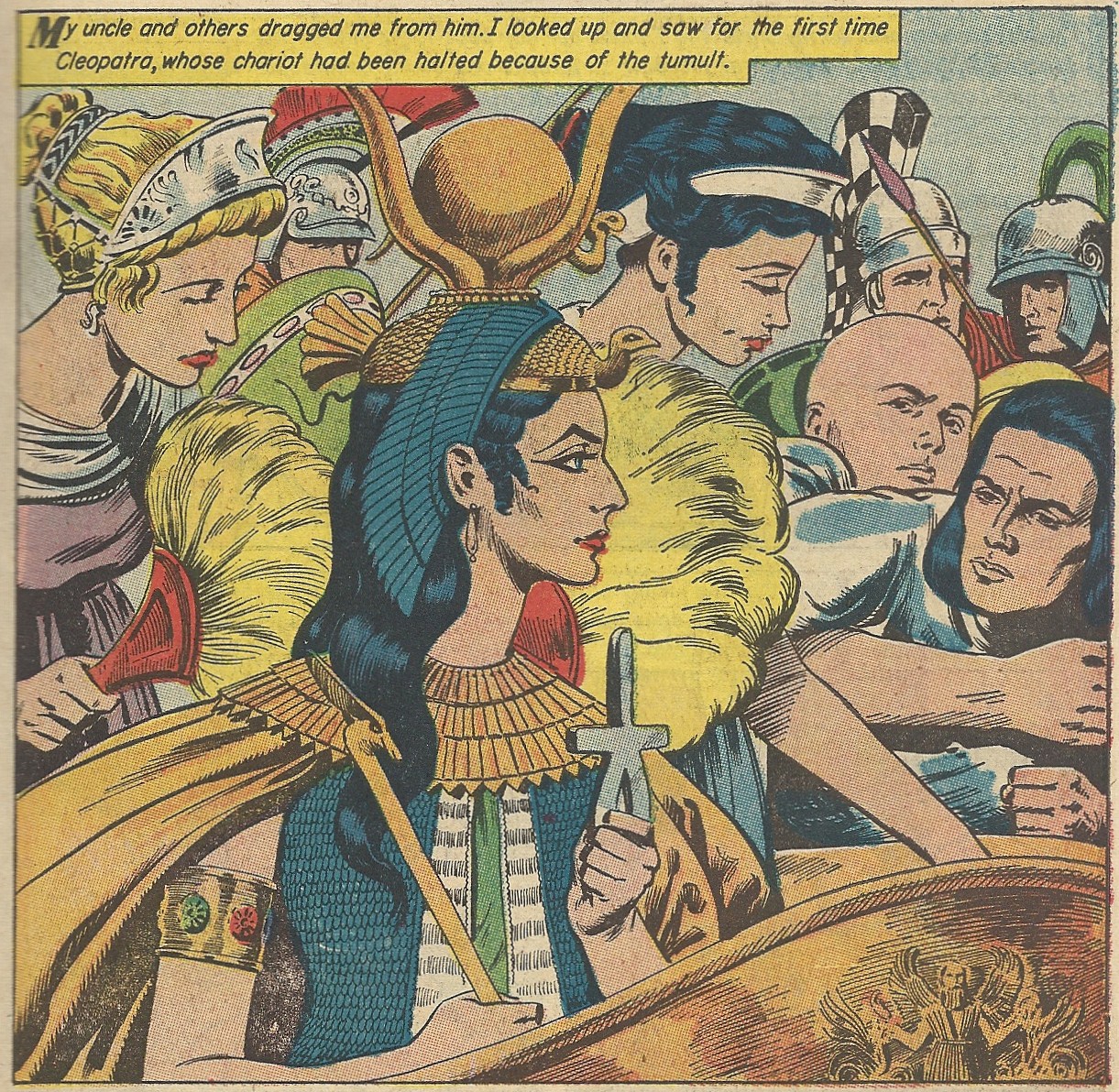
Plus all the Egyptians are extremely pale. I’d expect some more melanin in a sun-drenched climate — I guess there was some high SPF sunblock back in the day.
The cover is by far the nicest part of this thing, though I’m not sure of the artist responsible for it. I like its tiled mosaic detail. It’s colorful and intricate and pleasing to the eye, like Cleopatra supoosedly was.
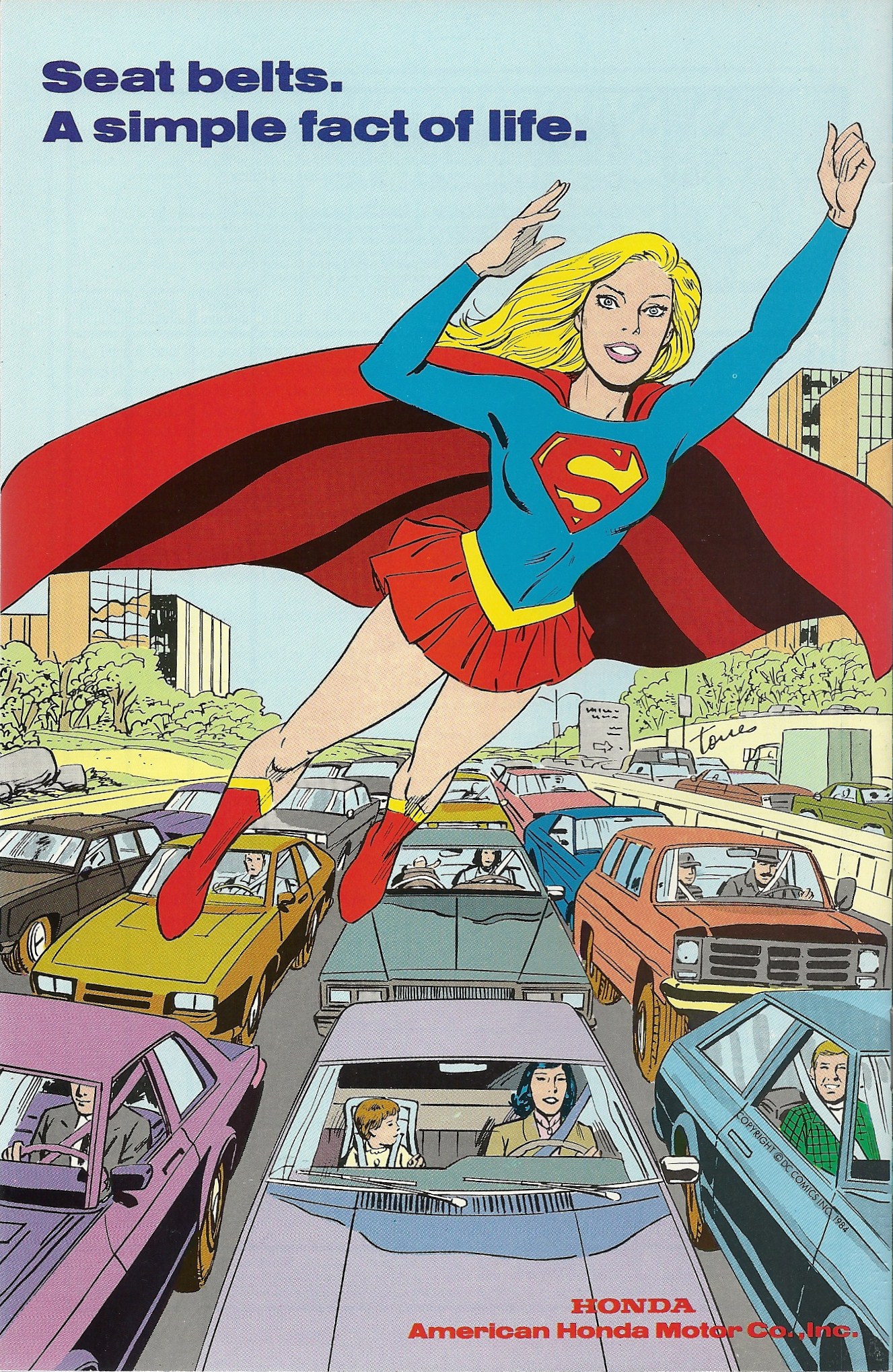
Buckle Up! – American Honda Presents DC Comics’ Supergirl
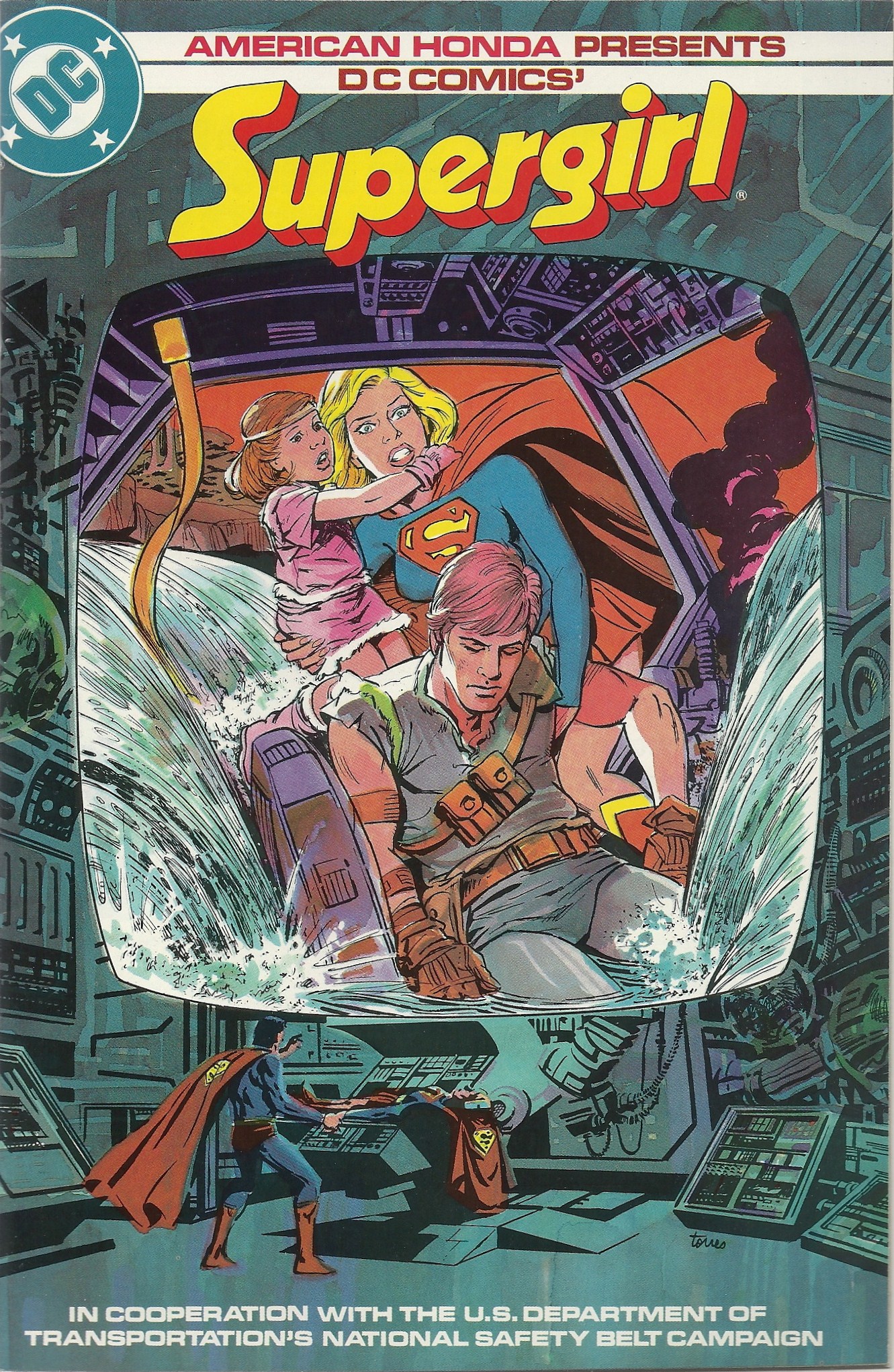
Ladies and gentlemen, your tax dollars at work.
This was the first of two comics published in a partnership between Honda and the Department of Transportation and DC Comics, and both of them featured Superman’s blonde cousin. This one came out in ’84 and Elizabeth Dole was the Secretary of Transportation back in those days, long before the time when we would all cringe in sympathy for her as her husband Bob started popping Viagra. Bob Dole ready for some lovin’! Here she is on the inside of the front cover:

Andy Helfer handled the script on this little ditty, while Angelo Torres, whose work I associate more with his caricaturish efforts in Mad, tackled the art duties. Supergirl is off saving the day, so her by day persona, Linda Danvers, has to take a rain check on a movie date with her beaux, Steve. He takes his younger sister with him instead, but to his sibling’s dismay, he doesn’t wear a seatbelt. I think you know where this is going:

When I first read this I was a little confused — it looked to me that Ellen, the younger sister, bought the farm when she rapped her head off the steering wheel. And wasn’t she wearing a seatbelt? She was nagging her brother about not wearing one. Whatever — she’s alive and well, and Steve is in a coma, apparently having lost the will to live because of his culpability in putting his sister’s life in danger.
Supergirl herself is torn up over the whole thing and goes to the Fortress of Solitude to brood. Superman shows up and has an idea for how to get into Steve’s brain and bring him back to life — he has a Dream-O-Tron or something that will let him travel into Steve’s subconscious and help Steve to mend the wrong. Supergirl wants the job, though, and Supes agrees to assist.
We’re presented with a series of Steve’s dreams, and in each of them he’s travelling with his sister and is forced to decide whether or not to buckle up, all the time with Supergirl in his ear. First he’s in an arctic sci-fi story:
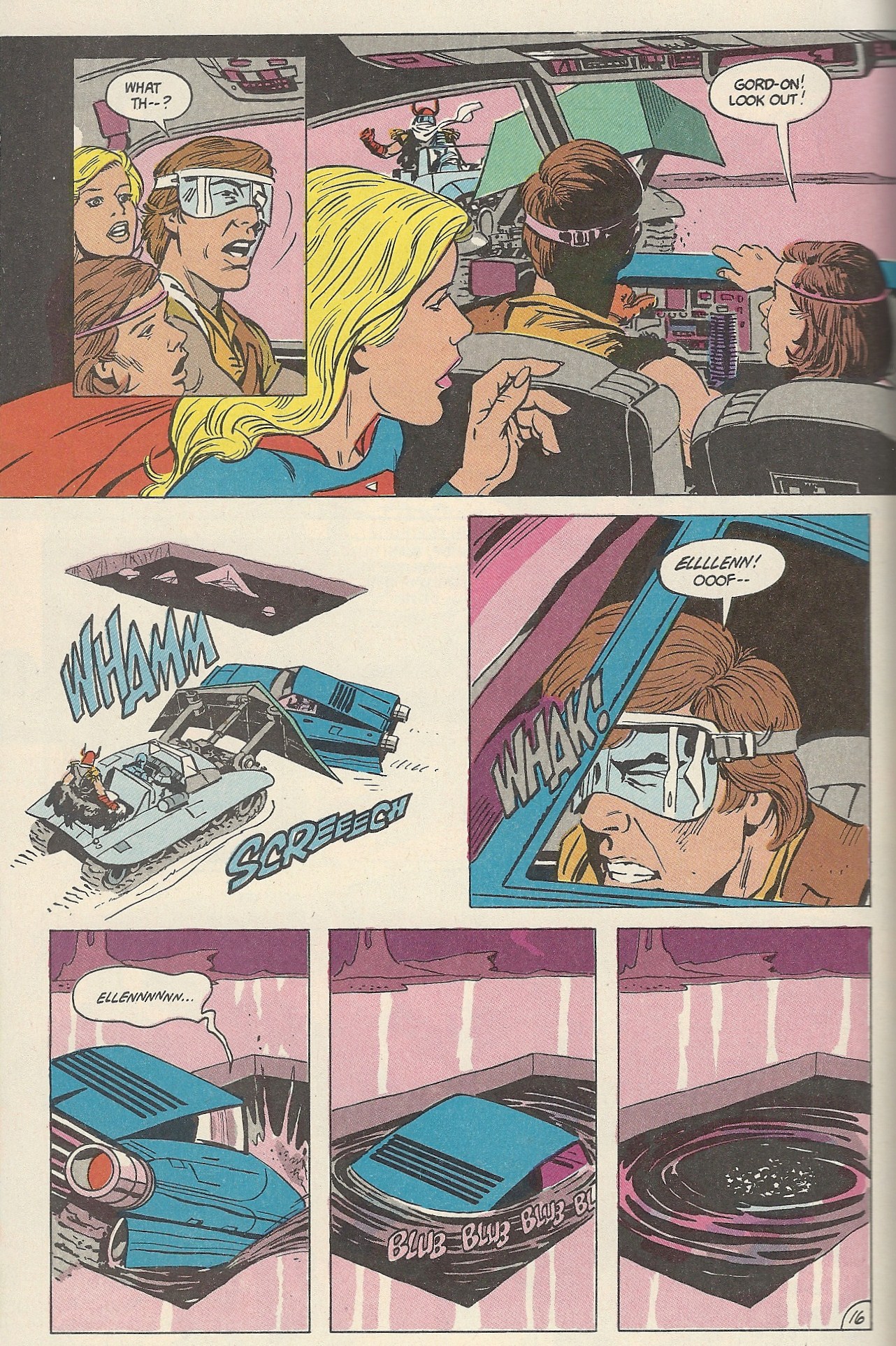
No luck there. Next up is an Indiana Jones-esque scenario:

No luck there either. Finally, he’s sort of a noir-y gumshoe, and this time he acutally buckles up:

Bingo!
Steve returns to the world of the living and all is right with the universe, and we’re left with a few pages of quizzes and statistics to hammer home the fact that you should always buckle your safety belt.
As a personal addendum, I can remember my grandmother oftentimes not wearing a seatbelt. The kicker was that, if someone called her on it, she’d take the seatbelt and drag it across her but just hold it in place and not buckle it. It was an act that reeked of defiance — maybe she just didn’t like to be told what to do. Then again, she was so tiny she might have been the one thing to survive a terrible car wreck. Kind of like how you can’t throw a feather against a wall — same principle.
An Ode to a Licensed Character, Part 8 of 8 – Rom #75

I grew up in upstate New York, and the Adirondack winters of my youth were cold and filled with snow. To keep my little hands warm my grandmother always knitted mittens for me (I know, I’m pushing the wuss-meter here). They were nice, and I liked them because when I’d play in the snow they’d get caked with the stuff. They’d be pretty much solid white.
They’d look like Rom’s hands.
What a long strange trip it’s been in this series on Rom’s final issues. I started it right around the time I opened this blog, which wasn’t that long ago though it seems that long ago. Click on the “Rom” tag if you want to read the earlier installments.
First, some housekeeping. I neglected to mention the death of one of the Spaceknights, Seeker, in the last issue. I apologize for the oversight, but since his death happened off-screen (screen? page?) it just slipped my mind. He died buying time for his comrades, as Rom flew off to confront the evil Lord Dominor and the two lady Spaceknights, Trapper and Scanner, went to try and contact other Spaceknight good guys still out roaming the galaxy.
Now that that’s out of the way, let’s get going.
This issue, aptly titled “The End!” comes to us from the familiar team of scripter Bill Mantlo and penciller Steve Ditko, with inks from P. Craig Russell (whose gentle style melds quite nicely with Ditko’s). Rom and Dominor have started their dance of death and Dominor continues to demand that Rom surrender Brandy to him. I can’t help but shake the impression that the other evil Spaceknights should be snapping their fingers (if they had any) and singing “When you’re a Jet, you’re a Jet all the way”:
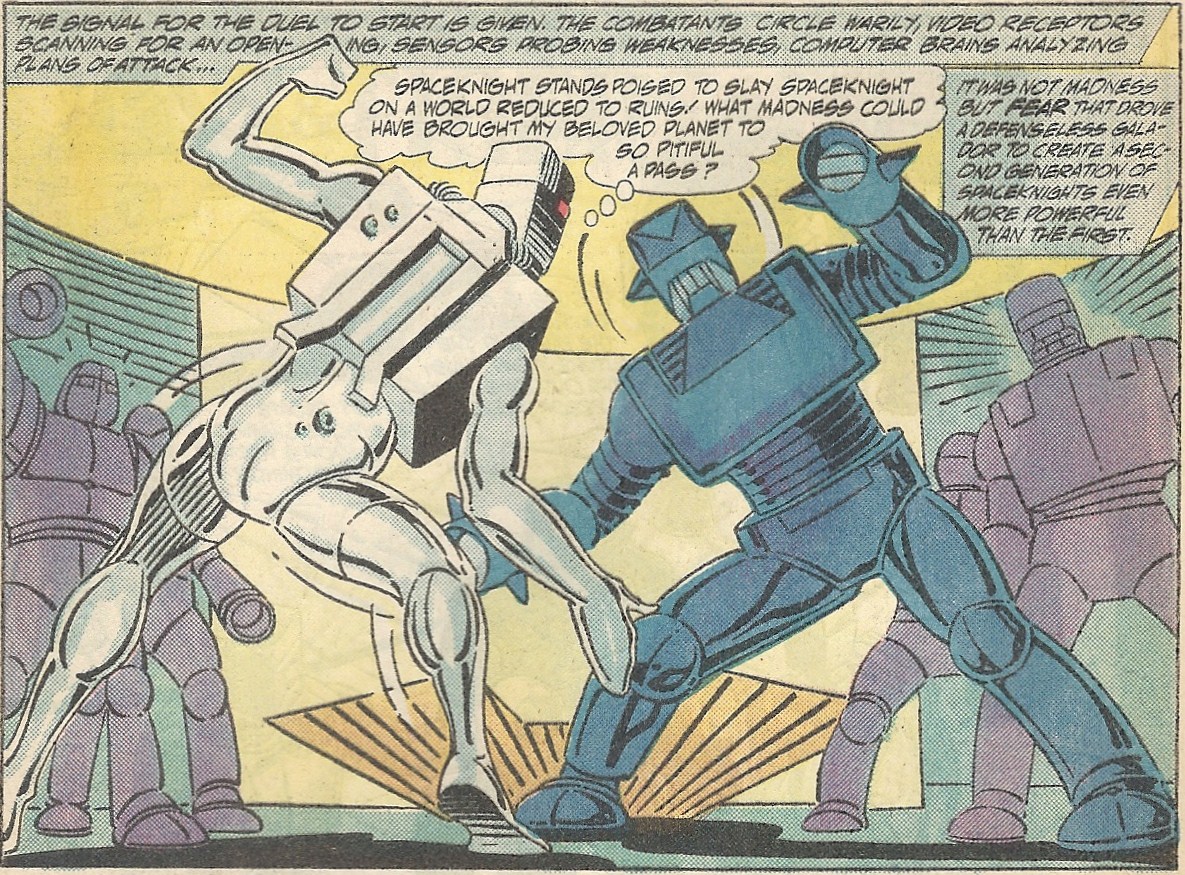
Lord Dominor quickly displays his penchant for dirty pool:
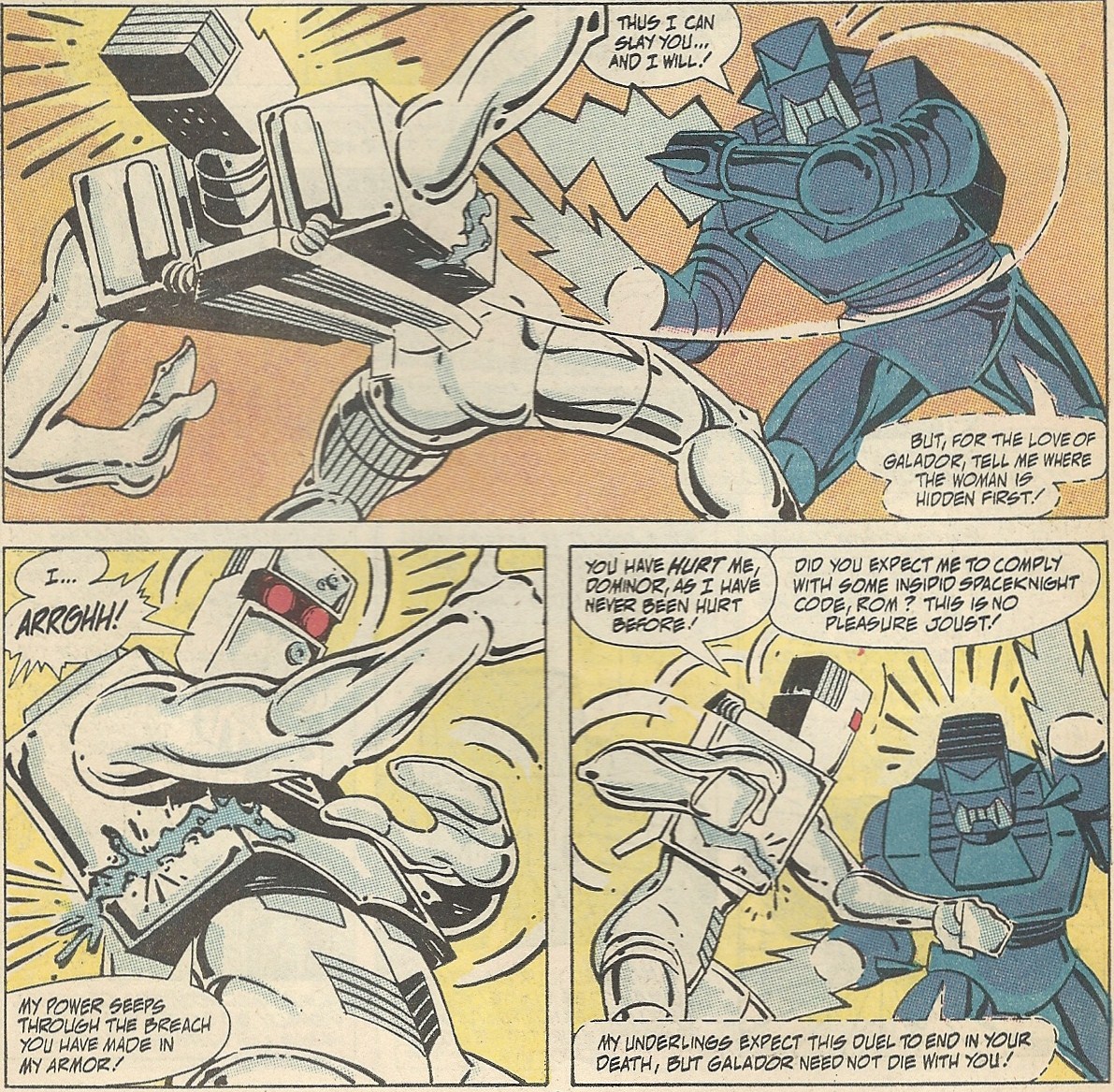
It seems that the metallic heroes of my youth were often getting slashed in the midsection by energy blades:
While Rom is getting sliced open, Trapper is holding off the rogues while Scanner works her communications magic. This is going to end well for them, right? Right?:

More on the impact of that page in a moment.
While everyone else is dying or flirting with death, Rom’s paramour, Brandy Clark, is rummaging around Galador’s basement, perhaps looking for something to take on Antiques Roadshow. She finds the absolute last thing that she’d expect to run across:
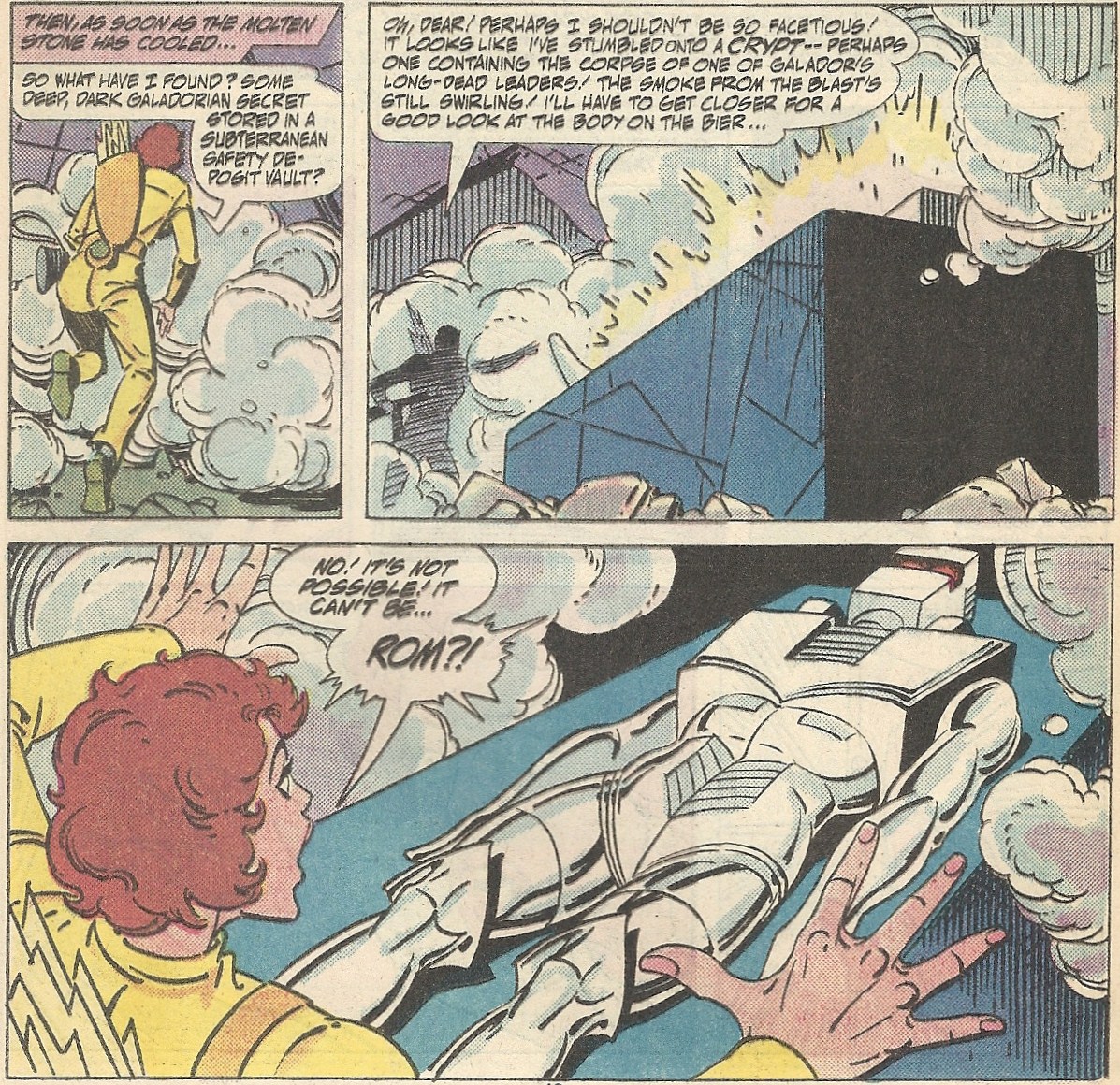
Huh?
The real Rom(?) and Dominor are still battling it out. Dominor uses every heel tactic that he can, including some ray that makes Rom hallucinate about the human life he’ll never have again. Finally Rom has his fill, and “goes to the whip hand”:
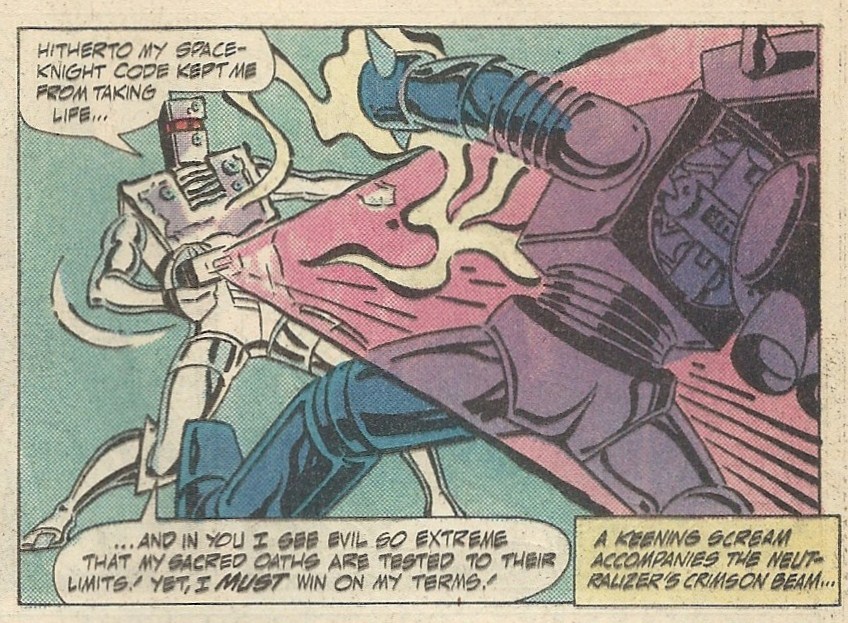
Dominor isn’t dead, but he’s thoroughly beaten, and the rogues, disgusted, decide to blow up Galador and everyone on it, including Dominor. They offer Rom a chance to join them and live. Or will he die with his world?:
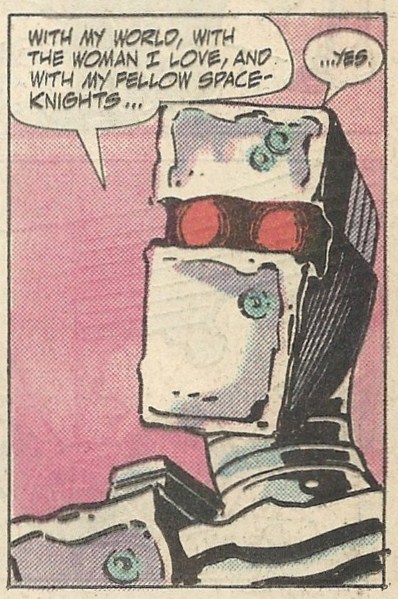
I find that to be one of my favorite Rom panels, and it seals my love for the guy. He’s exhausted, Dominor’s melted half of his armor, he still has the damn Spaghettio rings that Ego’s antibodies gave him back in issue #69 (that have disappeared and reappeared depending on the inker), but he’s honorable to the end.
The rogues form a circle, not to sing Kumbaya but to blow the world to kingdom come:
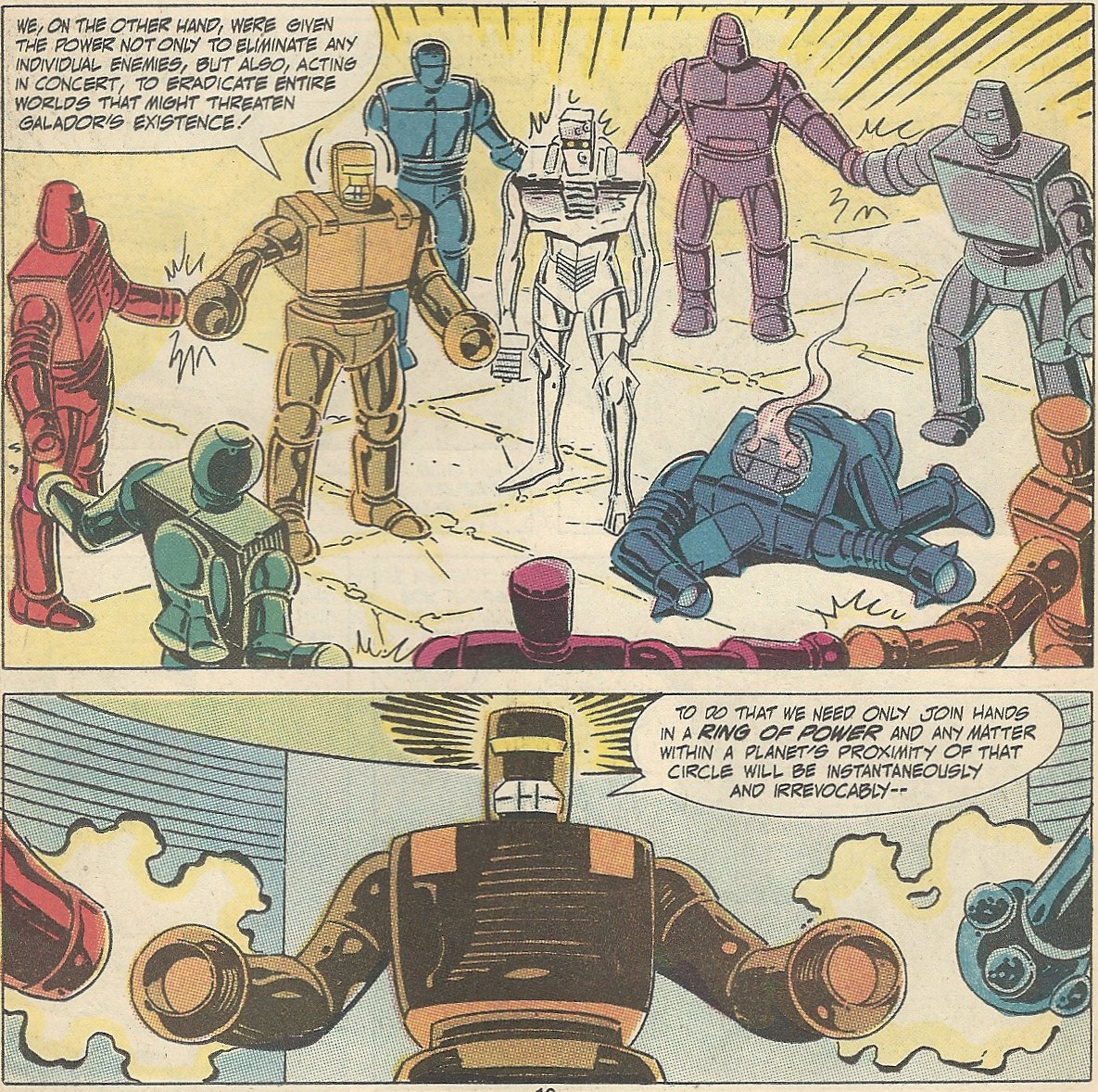
“Ring of Power” you say? Get the Tolkien estate on the phone!
In a final proof that the new Spaceknights aren’t the brightest bulbs around, they only wind up destroying the tower they’re in and themselves — Rom and Dominor survive. Apparently Dominor built a failsafe into his minions for just such an eventuality, and I think he’d be forgiven if he had this reaction to their self-destruction:
Any crowing would be short-lived, however, because Dominor promptly discovers that the hiding place for his own humanity, his throne, has also been destroyed. This sends him over the edge, and, after he overpowers Rom and seizes his Neutralizer, he pulls a Hemingway:
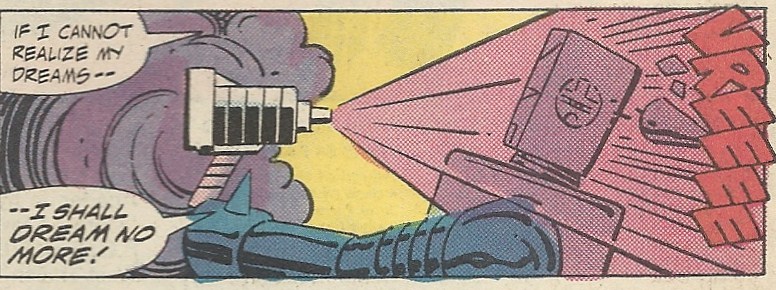
Soon Brandy and the Spaceknights that Scanner was able to contact show up, and they come bearing a gift — a glowing orb that contains Rom’s humanity. Whaaaaaaaa?:

I know, it’s a little too convenient. But everybody else is dead, so I guess we can have this happy ending. Rom takes the orb and… :
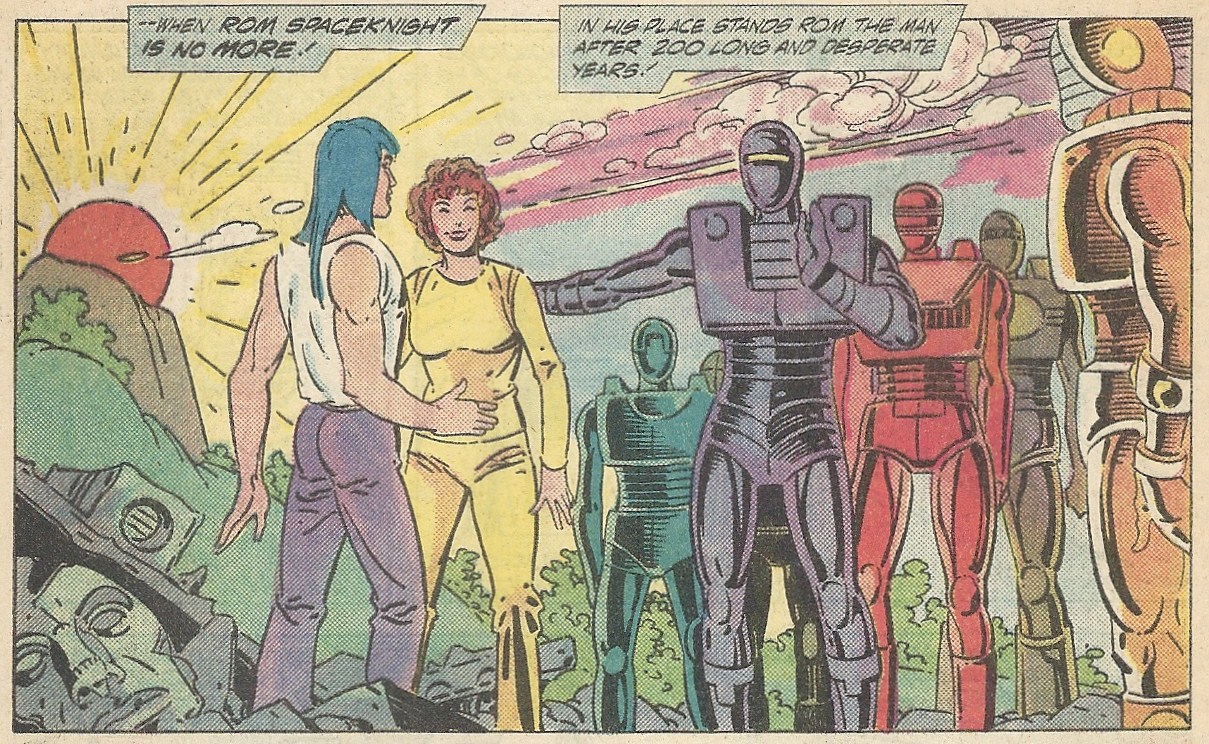
The good Spaceknights take the news of their own destroyed humanity incredibly well, and fly off to protect Galador while Rom and his woman, uh, get down to business:
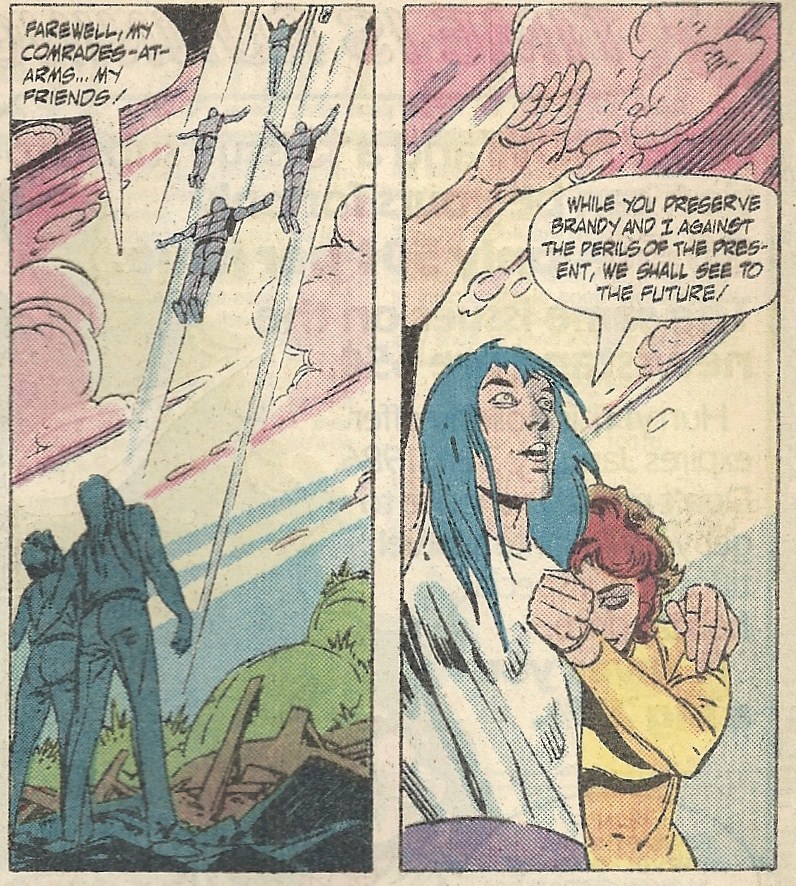
Like rabbits, folks. Like rabbits.
And that’s all she wrote. In some ways the quick and out-of-left-field resolution to the story robs the overall arc of some of its power, but I recall as a youngster being very sad to see Trapper and Scanner die. Not to stretch the earlier Transformers comparison too thin, but their brutal killings were eerily like the deaths of so many Autobots later that summer in the animated Transformers: The Movie. You could have picked my jaw up off the floor when I saw most of my favorite robots in disguise wiped out on screen, characters that were never even slowed down by a laser blast on the TV show:
I never developed the attachment to the Spaceknights that I did to the Transformers, but I think I remember making my own paper figurines of them (crude, I’m sure), much like a young Alex Ross made figures of his favorite DC characters (as detailed in Mythology):
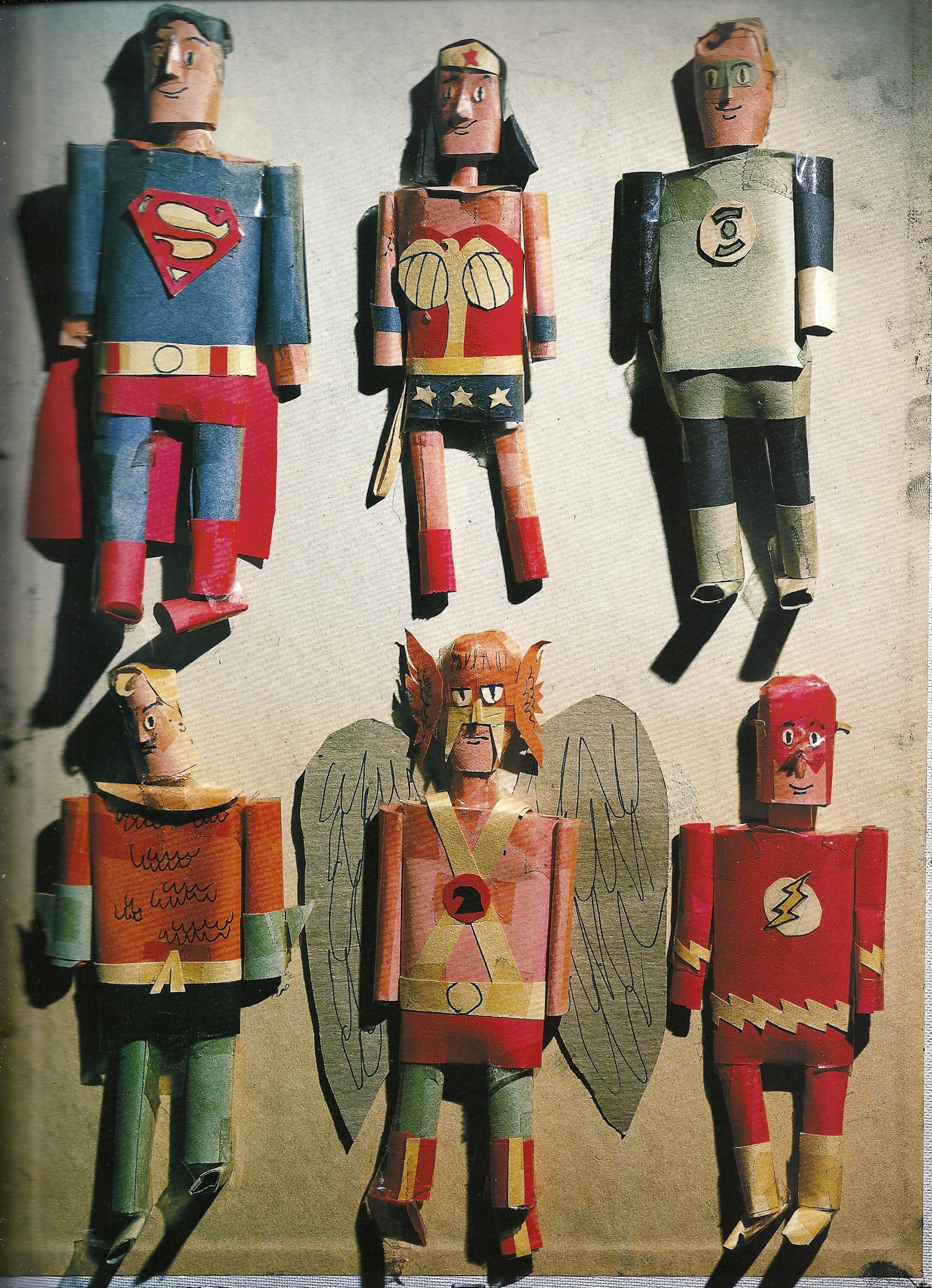
Mine sucked. They were flat and two-dimensional, but then again I wasn’t destined to grow up and be a superstar artist. Go easy on me. The point is, I came to love the Spaceknights, and it was especially jarring to see ladies (armor clad ladies, granted) die in such a violent fashion. It’s a kick in the groin, and it more than makes up for the “Hey Rom, I found your humanity in the back of a closet!” resolution.
My thanks to Bill Mantlo for crafting this story, to Steve Ditko for bringing it to such vivid life, and to all the inkers that embellished the master’s pencils on this arc, one of the treasures of my childhood. I’ll be carrying around memories of Rom and supporting players like Unam the Unseen and Raak the Breaker for the rest of my days.
And that, my friends, concludes my Ode to a Licensed Character.

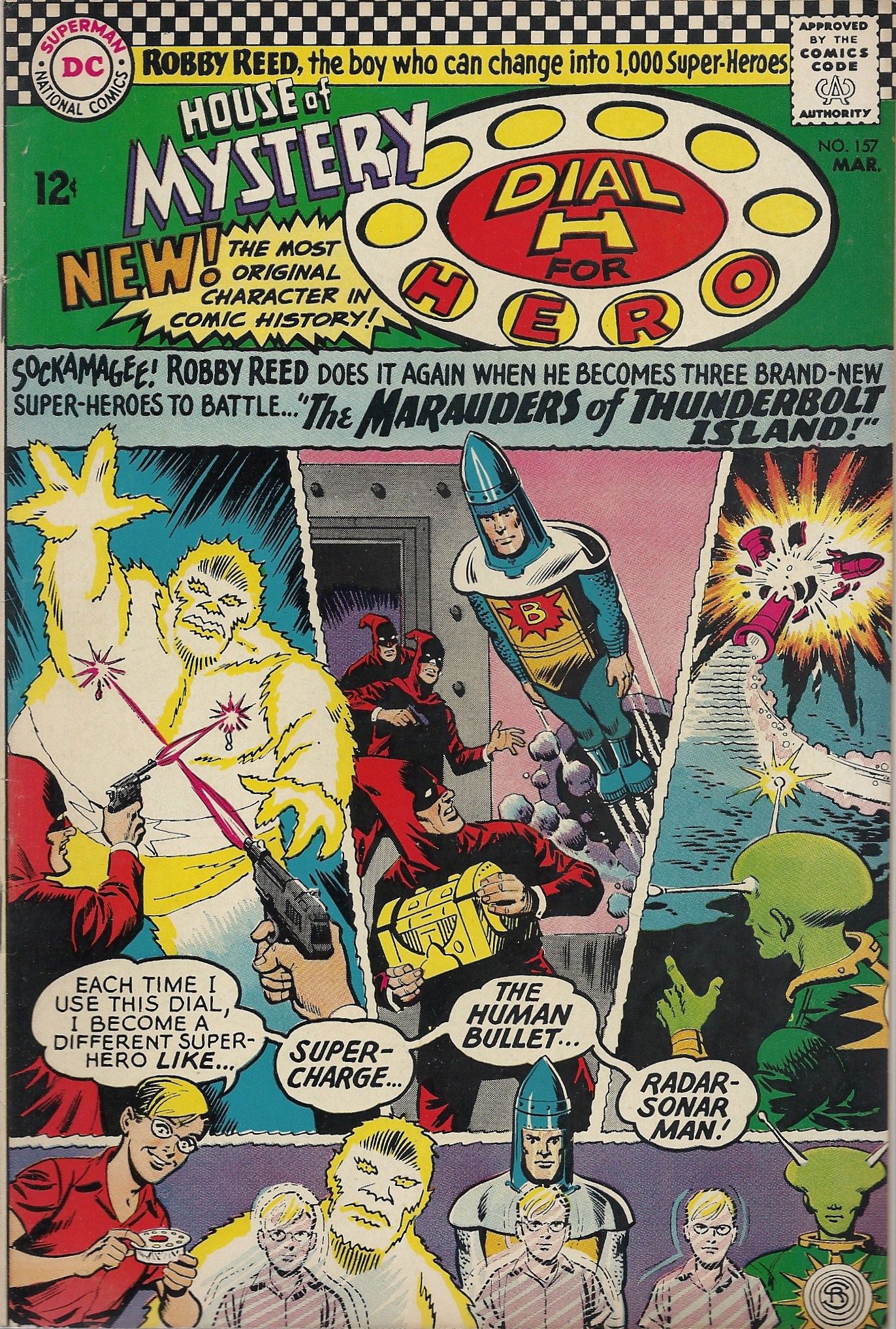
“Dial H for Hero” always sounded weird to me. I always thought that there was some magical phone that would summon a hero to fight crime. I had no idea that there was just a dial that a kid found in a cave, and he deciphered the letters on it and that when he dials H-E-R-O he turns into a random, you guessed it, hero. I guess I can roll with all that.
Unfortunately the kid in question is one of the most annoying human beings in the history of comics, a bespectacled nerd by the name of Robby Reed who has an aptitude for science and general genius-ery. Ugh. Oh, and he says “Sockamagee!” all the time. Ugh again.
“The Marauders from Thunderbolt Island” is brought to us by Dave Wood and Jim Mooney, and finds Robby and his alter egos squaring off with the evil Mr. Thunder and his malevolent minions, villains that Robby had defeated in the previous issue (his debut). Mr. Thunder steals some machinery from a naval vessel, and Robby first has to get rid of his friends before he can spring into action:

Nothing clears a room like a test tube.
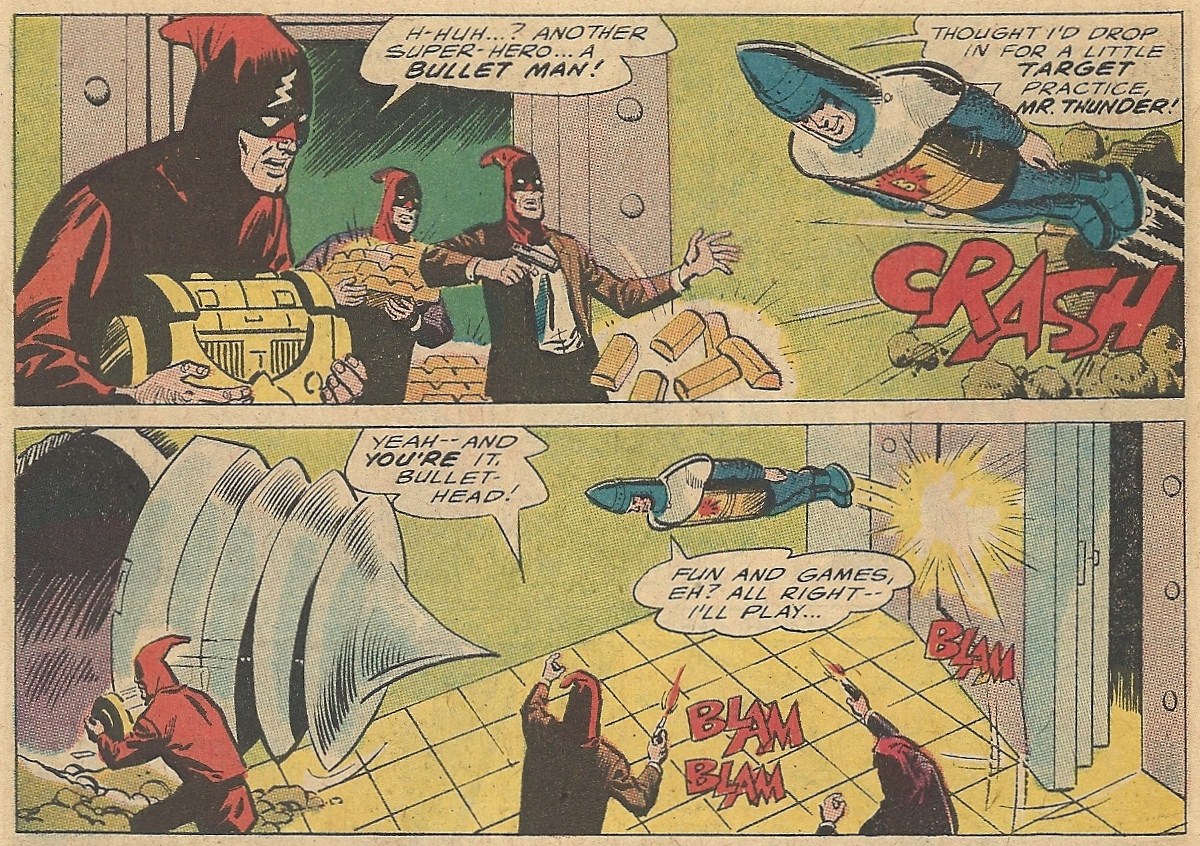
The first hero, Bullet Man, ricochets around and whoops the baddies:
That doesn’t finish the job, so Robby has to change into an elctrified sumo wrestler called Super-Charge:
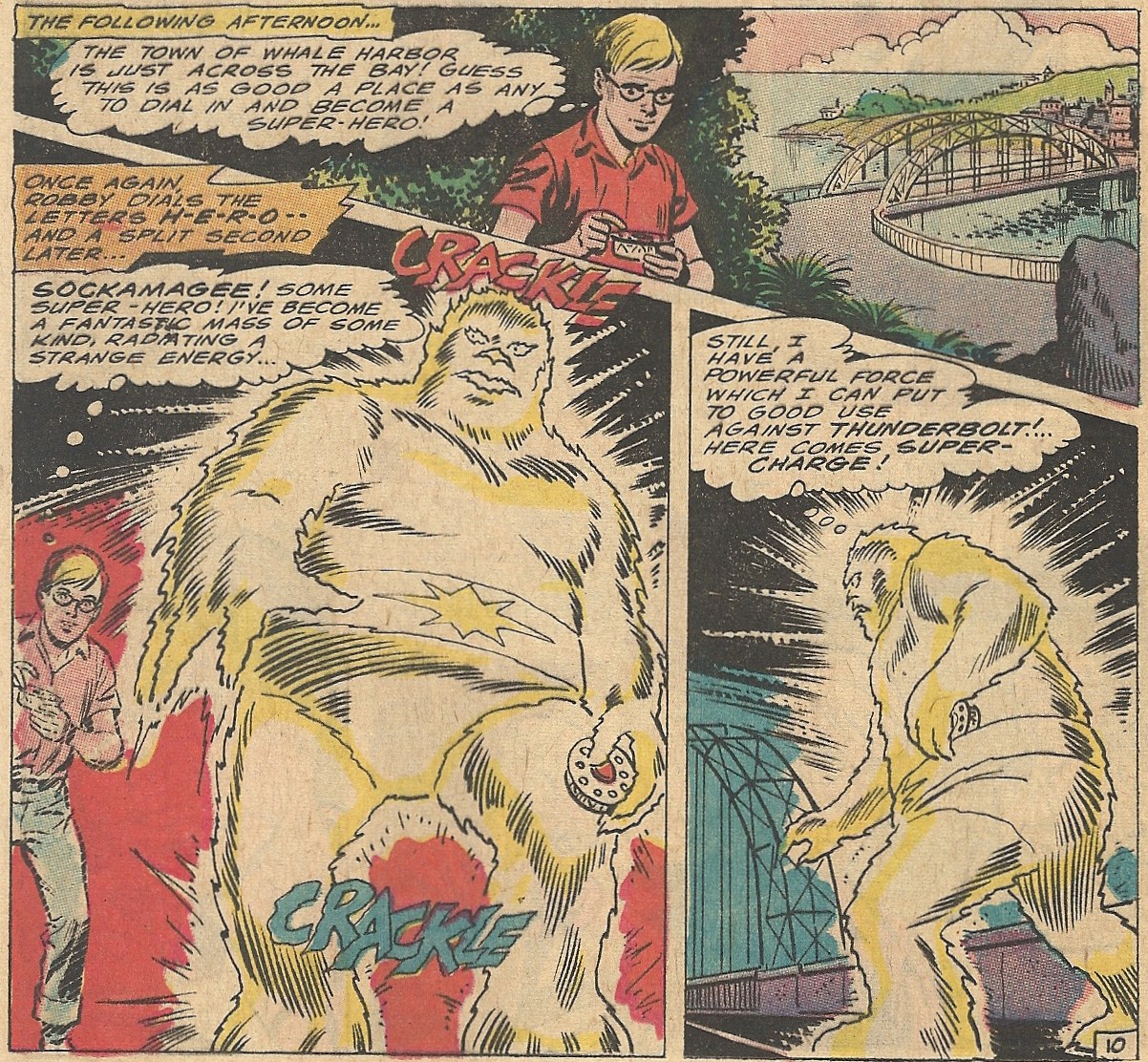
In this guise Robby gets captured, but he makes his escape when he changes back into his nerdy self. Next up is Radar-Sonar Man:

Would Radar-Sonar Man get mad if you called him Sonar-Radar Man? Just a thought…
This blind hero finally gets the job done, and Robby retires to his residence for the obligatory final yuck with Gramps:
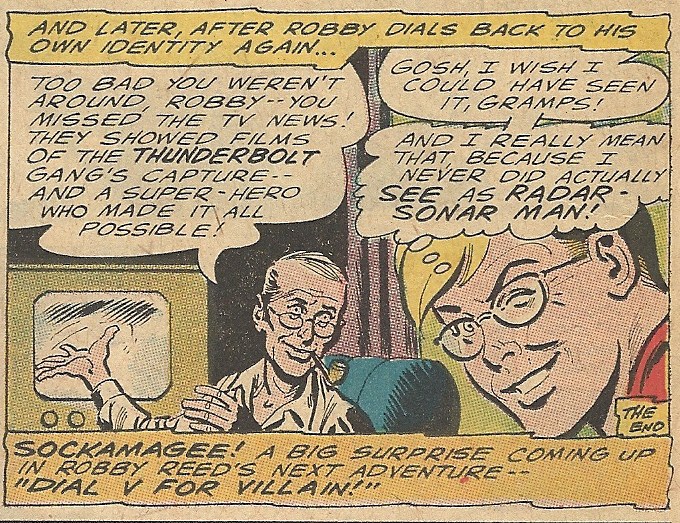
I want to dump this kid’s books so bad. You have no idea.
The J’onn J’onzz backup only adds insult to injury. “Manhunter, World’s Greatest Clown!” comes to us from Jack Miller and Joe Certa, and features that most horrific of things — a clown. And not just any clown, but an evil clown with an overlarge head:

Terrifying combo. It’s like a tarantula with a machine gun.
The “clown” in question is actually Professor Hugo, a crook that the Martian Manhunter has bested and thoroughly humiliated in the past. In a goofy revenge plot, Hugo, after his escape from prison, uses a mind-control ray in an attempt to make J’onn into a laughingstock. While Hugo’s dressed as a clown he lures the Manhunter to him by, well, just waving at him (I guess J’onn likes clowns) and zaps the green fella. How does he test the machine’s efficacy ? Dancing!:

Maybe it’s just me, but J’onn doesn’t look like he hates those moves all that much. Gotta daaaaance! Gotta daaaaance!
Hugo in his clown guise turns J’onn into a circus act and tries hard to make a fool out of him — J’onn fails at things like juggling, he brings brick walls crashing down on himself and burrows down into the ground and bursts a pipe. But all this has an unexpected effect — suddenly J’onn is the new Buster Keaton:
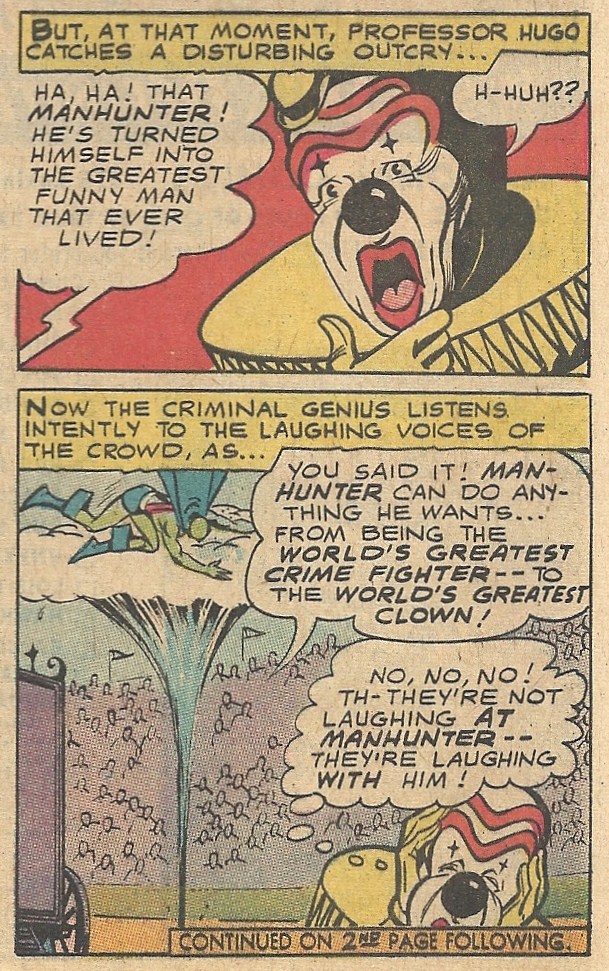
Hugo gives up on the whole embarassment deal and gets the bright idea to actually use this mind control thingamajig to, oh, I don’t know, commit crimes. That doesn’t last long, though, thanks to the Martian Manhunter’s disturbingly nude and grammatically challenged sidekick, Zook:

And Hugo heads back to the hoosegow.
Kind of a double dose of silliness in this issue, though I sort of like the second effort. When you have “Sockamagee!” and Zook both under one roof, I suppose goofy is what you’re bound to get.
At least there’s an evil clown. That’s storytelling gold. Coulrophobes beware!
I might have the time, but I most assuredly don’t have the patience – Aurora Hobby Kits

I was never much for models as a kid. I remember having a model kit for KITT (hey…) from Knight Rider, but despite my best efforts the damn thing turned out as a misshapen glue-riddled mess. I think it made a prompt turbo boost jump right into the garbage.
And so ended my brief dalliance with models.
I am, however, intrigued by these ads which I see crop up in Silver Age books. I associate models with cars and ships and metal things in general, not flesh and blood (sort of) characters. I was just wondering what one of these things would look like all finished.
Here’s the box to one of them:
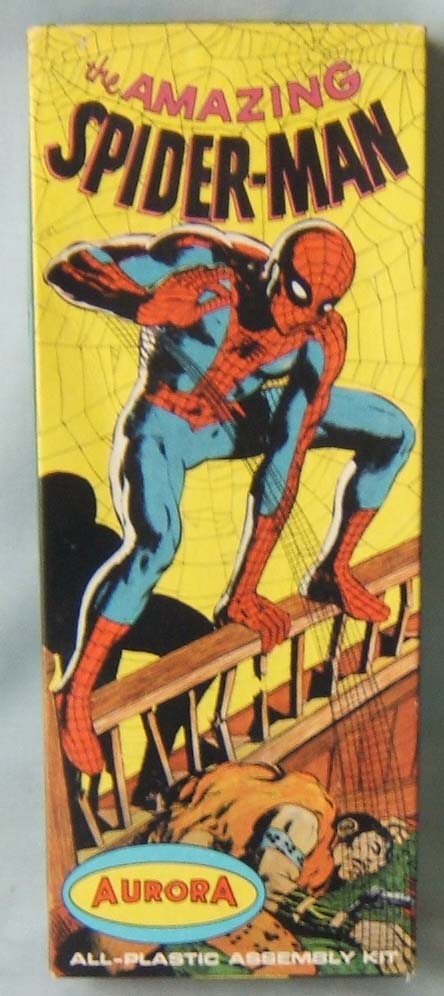
And here’s a finished product, after it’s been snapped and glued and painted:

Kind of neat, though I’m not crazy about the webbing effect. This particular model was reissued a couple of times, and one of the later iterations came with a mini-comic inside. Hmm…
A comic that will not be pushed, filed, stamped, indexed, briefed, debriefed or numbered – The Prisoner: Shattered Visage
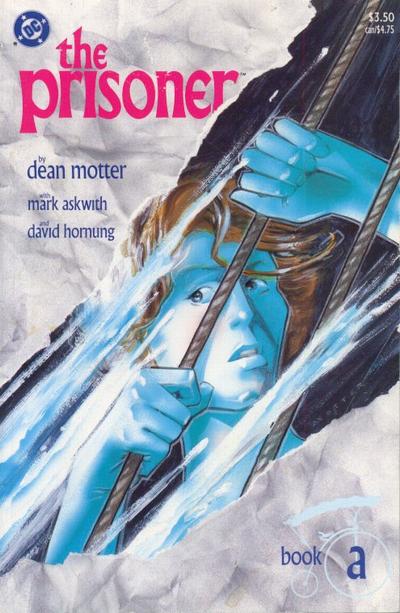
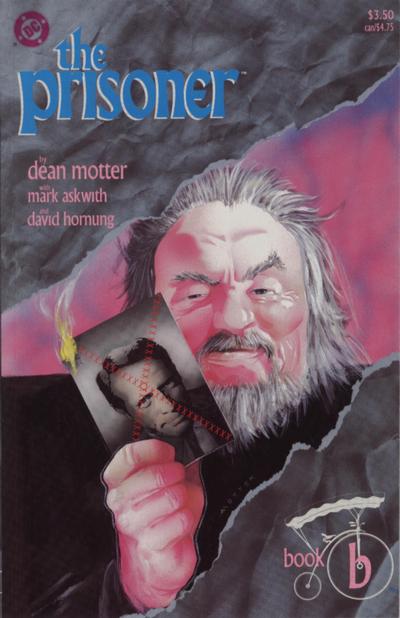
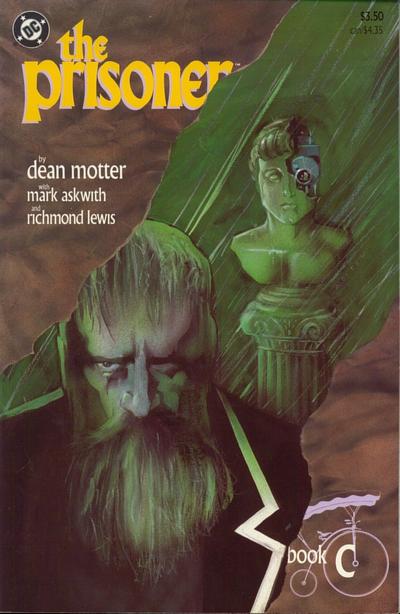
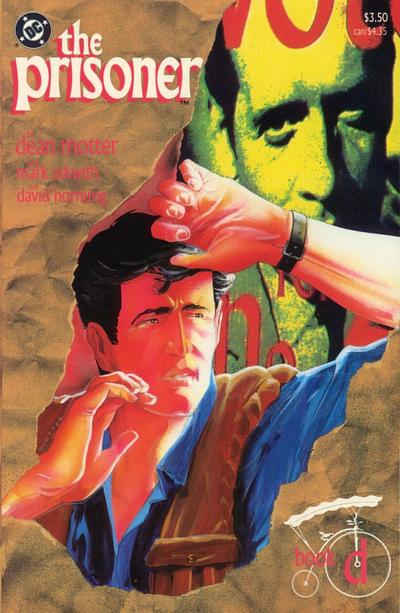
I first watched The Prisoner back in 2004 and fell in love with it. It “had me at hello” and gets my highest recommendation, with the rather large caveat that it’s most definitely not for everyone. It’s colorful and energetic but thick with late-60’s allegory, and it’s a strange journey, from the pennyfarthing bicycles to the white balloon security system known as Rover:
I get how some people could not be into it, though no one can deny the fun of the long but dramatic sequence that opened most episodes:
Hell, I even like the font used in this series (It’s a derivative of the Albertus font, for all you typeface nerds out there — I looked it up!) .
The late Patrick McGoohan, who I first got to know many years later when he played the evil Edward the Longshanks in Braveheart, was magnificent as the nameless Number Six. His controlled fury throughout the entire run of the series and the defiant plotting that you could see in his steely eyes were wonders to behold.
So how was the comic book follow up?
A mixed bag.
The story, from Dean Motter and Mark Askwith, finds a new character trapped in the Village (now abandoned), and there encountering an older, crazier and hairier Number Six. It’s hard to delve deeply into the plot without going too far into the content of the series. There are plenty of callbacks to the show and Easter eggs aplenty for the fans, and the locales of the real-life filming location of Portmeirion are once again on display. All that’s well and good, but the story is somewhat opaque, and part of what made the series so fun and got you past all the strangeness was the contrast between the bright, cheery primary colors of the Village and its dark, Orwellian nature. This comic employs the drabber color scheme of something like Watchmen, and in this case its a bit too nauseating. It’s like in Star Trek: The Motion Picture when the dazzling gold, blue and red uniforms from the series were replaced by those dreadful gray jumpsuits that looked like they were tailored for Kim Jong-il. Otherwise the art is rough, but adequate — here’s an example of one of the less blah pages:
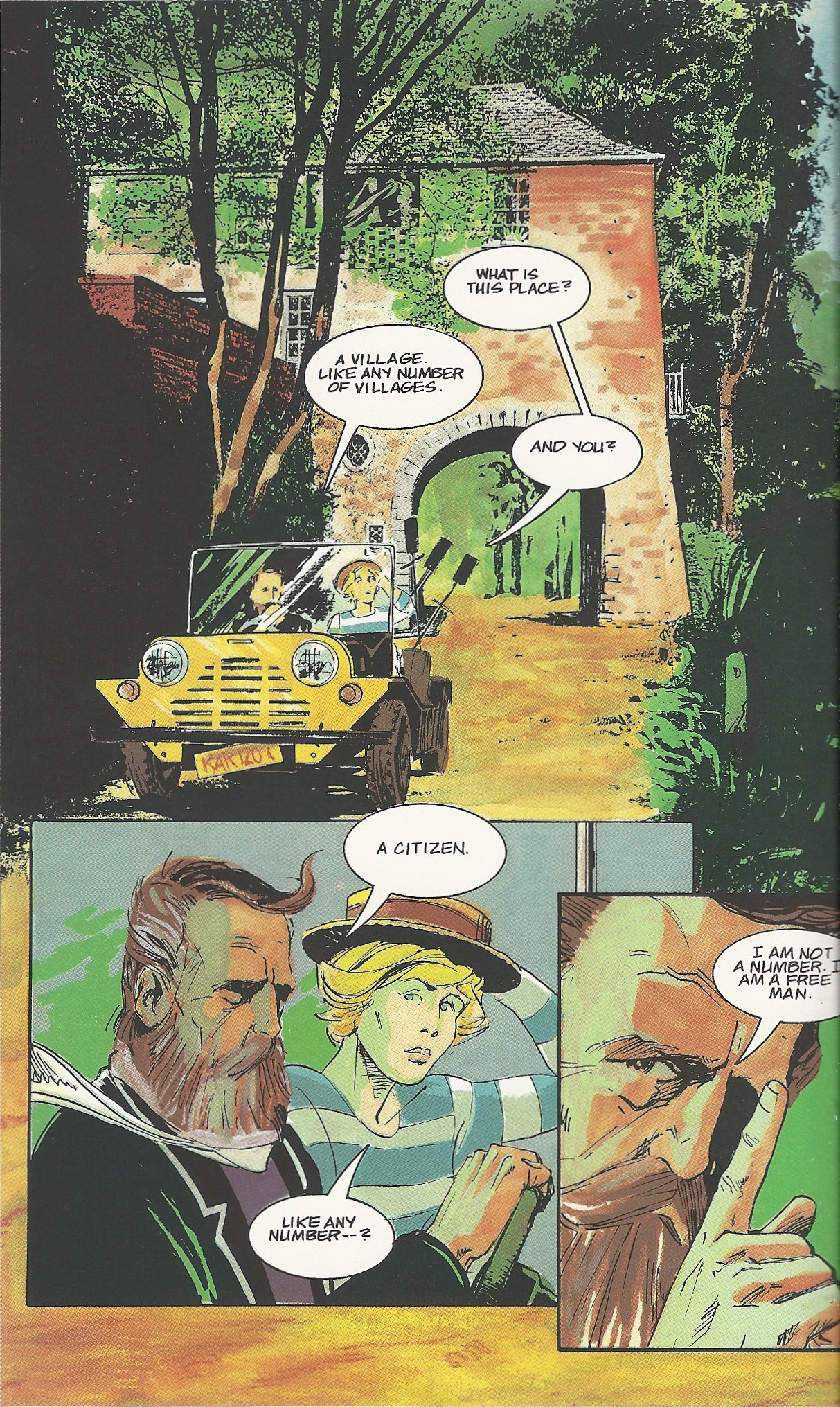
A fan of the series may or may not like this comic. A novitiate would find it utterly bewildering. I thought that it was okay, but mainly because of the nods to the original series.
As I was preparing this post I did a little additional reading and discovered that Jack Kirby actually threw together a proposed first issue for a Prisoner comic book back when the show was still fresh. Throw that discovery into the “You learn something every day” pile, I guess. It was a straight adaptation (with a few Kirby twists — he could never resist showing incredibly complex machinery) of the first episode, “The Arrival.” You can read more about it here.
Sometimes when Kirby drew real people his interpretation would leave a bit to be desired, or so it seems to me. His depiction of McGoohan as Number Six, however, is quite well done, at least on the couple of pages I looked at. Perhaps it’s McGoohan’s prominent brow and his eyes — they fit nicely with Kirby’s style.
Someday I’d like to see that comic “pilot” get released. I have a feeling I’d enjoy flipping through it even more than Shattered Visage.
“I am not a number, I am a free man!”
My first and most recent encounters with DC’s laughing maniac (no, not the Joker)- DC Comics Presents #88 & Beware the Creeper #5
One of the weird things about comics is how you join a book or character in midstream and, because of that, the “origins” of said book or character for you are always that later iteration. Since the Creeper made his debut in Showcase well before I was born, my first encounter with him was one of the many guest appearances that he subsequently made in the DC Universe.
My first meeting was here:

This book came out at a memorable time in my youthful comics fandom. There was this thing called the “Crisis on Infinite Earths” going on that seemed so big and cool to me. Keep in mind that I never actually had an issue of the Crisis series — I’m guessing that that particular title didn’t make it to my local newsstand. So I was relegated to the crossovers, which always seemed to show our Earth getting torn apart by unimaginable forces. Like this one. The Crisis seemed so dark and awesome
“Prophecy of the Demon-Plague!” comes to us from Steve Englehart, Keith Giffen and Karl Kesel. With the world ending, the armegeddon types are in heaven — hey, the sky is actually falling! Sadly, there’s no sign of Walter Kovacs and his “The End is Nigh” placard among their numbers. Here the moon has shifted in its orbit and that’s causing all kinds of troubles, and its of course created a media firestorm. By-day reporters Jack Ryder and Clark Kent are on the story, though they don’t see eye to eye on what the coverage should be like:

Giffen leaves a lot of space open on many of the pages in this issue. I think it’s a nice touch, and adds weight (along with his angular style) to some of the smaller cramped panels.
Long story short, some discovered runes release a demon that uses the airwaves to infect humans, and Superman and the Creeper both spring into action to fight it. Supes takes a hit early on, and he’s forced to team up with a, how shall we say, unstable ally:
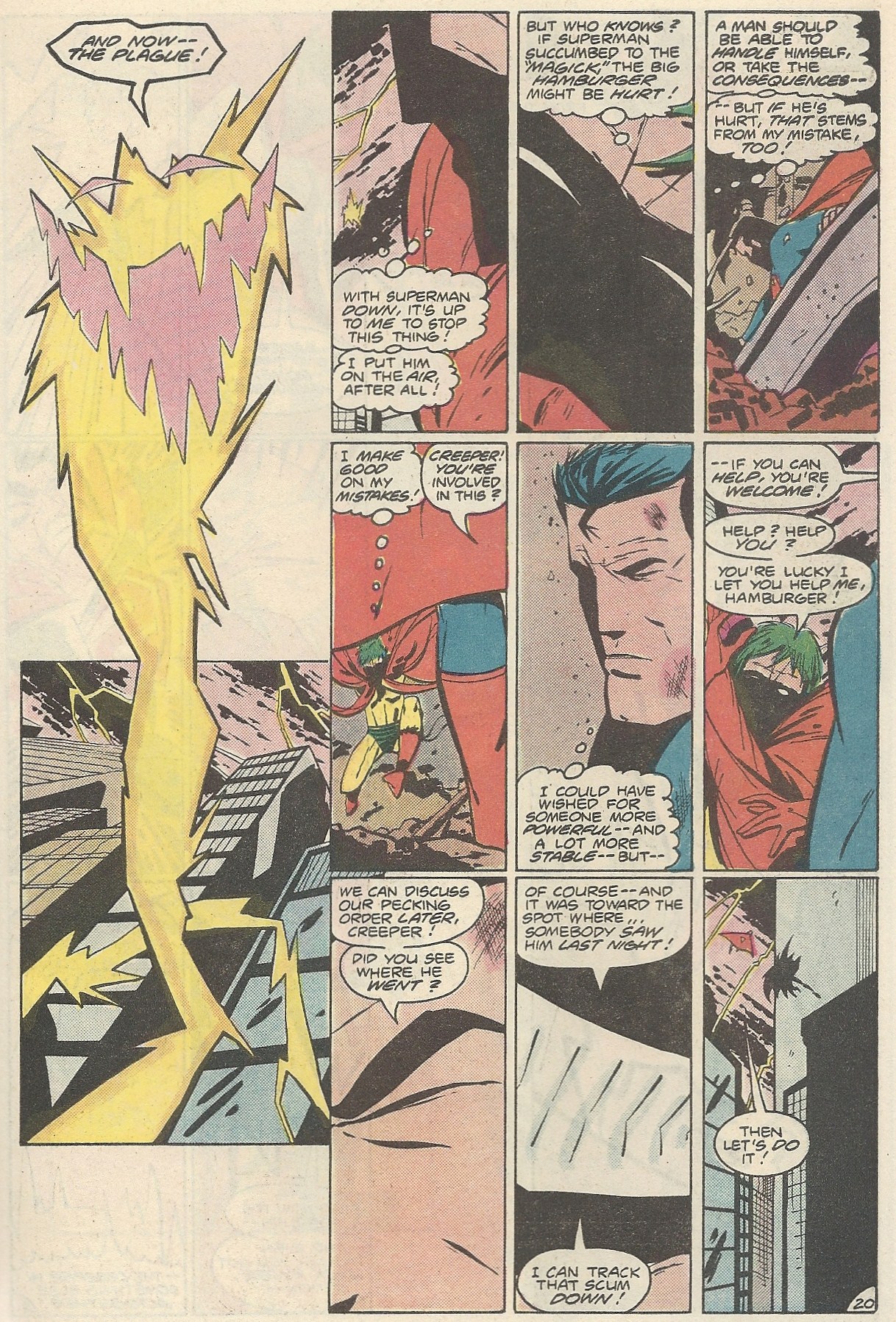
Hamburger? And that demon looks like a really pissed off version of Reddy Kilowatt:
Guess what? They beat the demon and Supes can’t wait to get away from this Creeper guy. I like the low opinions each has of the other as they part:
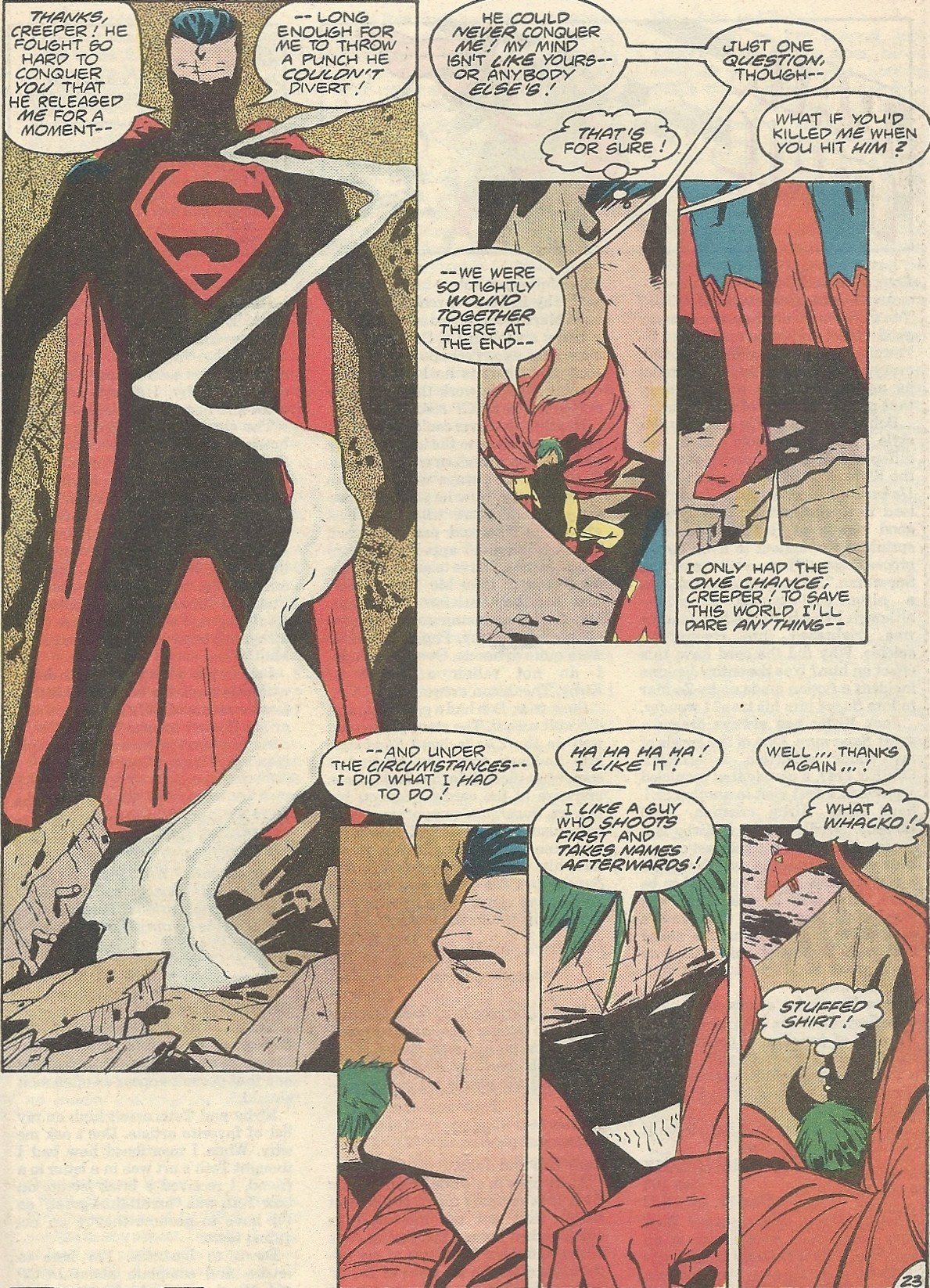
I remember as a kid not being sure of what to make of Giffen’s art. It was different, and it certainly didn’t fit in with the Curt Swan Superman that I’d come to know, but it definitely made an impression. I think it was well suited to this story.
A couple of weeks ago I bought this:

I was of course aware of Steve Ditko’s creation of the Creeper, but I either never knew or forgot that he had handled this brief and early series detailing his adventures. I was struck by how different his portrayal was here in the character’s infancy. In “the Color of Rain is Death,” from Denny O’Neil, Steve Ditko and Mike Peppe, the Creepster spends much of the issue battling his nemesis, Proteus. For what I find jarring, take this page as an example:
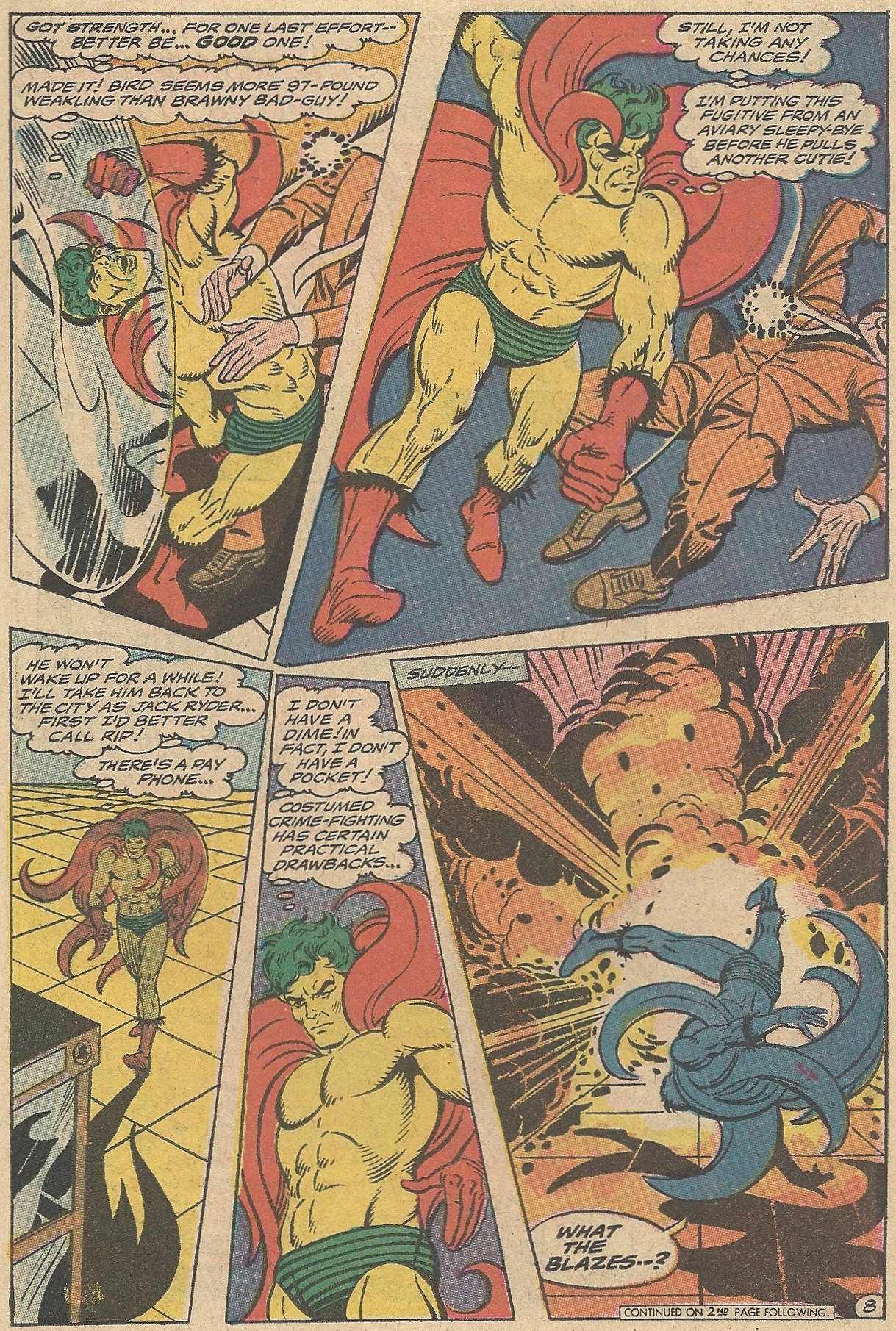
The Creeper’s straight-laced internal monologue is a bit odd (for me), and I’m not sure about the “shattered glass” panel style that Ditko employs. I’m just so used to the regular panels he always used so effectively on books like The Amazing Spider-Man.
There’s also some psychedelic grooving going on later in a dream sequence as Jack Ryder wonders just who Proteus might actually be:

This issue ends with a cliffhanger:

Ditko sure loved to trap his heroes in impossible to escape scenarios with water dripping down over them, didn’t he?:

I dig the way Ditko draws water rivulets. I just do.
I enjoy the juxtaposition of the two artists — Giffen’s hard edges and sharp points versus the soft flowing curves of Ditko. It makes for an interesting contrast. And the difference between the Creeper’s divergent characterizations in these two books lies in the evolution of the character. He started out as a guy who could control his transformations and only acted insane, but later his origin was tweaked and he was a person who couldn’t control his transformations and who really was cuckoo for Cocoa Puffs. I prefer the latter, and as much as I like Ditko’s art, I kind of like the way Giffen drew the Creeper with his face always covered by shadow. It gave him a dark, villainy feel which was apt for such a “tweener” character.
Hamburger?
Lane Mastodon? – Infocomics

I see this advertisement crop up on occasion in books from the late 80’s. I wondered what these “Infocomics” were, so I did a little internet research. They were sort of a primitive version of todays webcomics but with a little twist. Here you could switch perspectives between characters as you were reading the story, so it could branch and merge in a lot of different ways. I guess there was an element of those old “Choose Your Adventure” books in these. An interesting if short-lived idea — I’m not sure if I would have been all that enthusiastic about such a thing back in the day, though I did have a clunky Apple IIgs that was the height of computer gaming technology for its time. I prefer my comics on flimsy paper, thank you very much.
I gather that Mr. Mastodon was a bit of a Flash Gordon spoof. He had a great name, that’s for sure. And I appreciate the $12 “cover price”:

One final note — I noticed the name of “Tom Snyder Productions” as having a hand in the development of this series of computer comics. No, not the Tom Snyder who used to host that program after The Late Show with David Letterman that could put even the most resolute insomniacs into a deep slumber. This Tom Snyder would go on years later to produce one of my favorite cartoon series of all time, the hilarious Dr. Katz. Small world.

I’m a big fan of comic relief, and there’s no greater source of comic relief in the Silver Age of the Marvel Universe than the ever-lovin’ Thing. Ben Grimm was quick to anger, and his bruised feelings could be the source of much merriment.
Leave it to the cold, austere Silver Surfer to act as the perfect foil.
“When Strikes the Silver Surfer!” comes to us from Stan Lee, Jack Kirby, and Joe Sinnott, and finds Ben itching to get over to see his girl, Alicia Masters. But when she doesn’t answer the phone, he works himself up into a near-conniption:

See? He got “obdurate” confused with a religion — the laughs are starting already!
Meanwhile, the always pensive Silver Surfer is continuing with his never-ending struggle to understand the humans Galactus has trapped him with. Alicia’s siren call attracts him, and he plays the role of a peeping tom before taking the direct approach to get her attention:
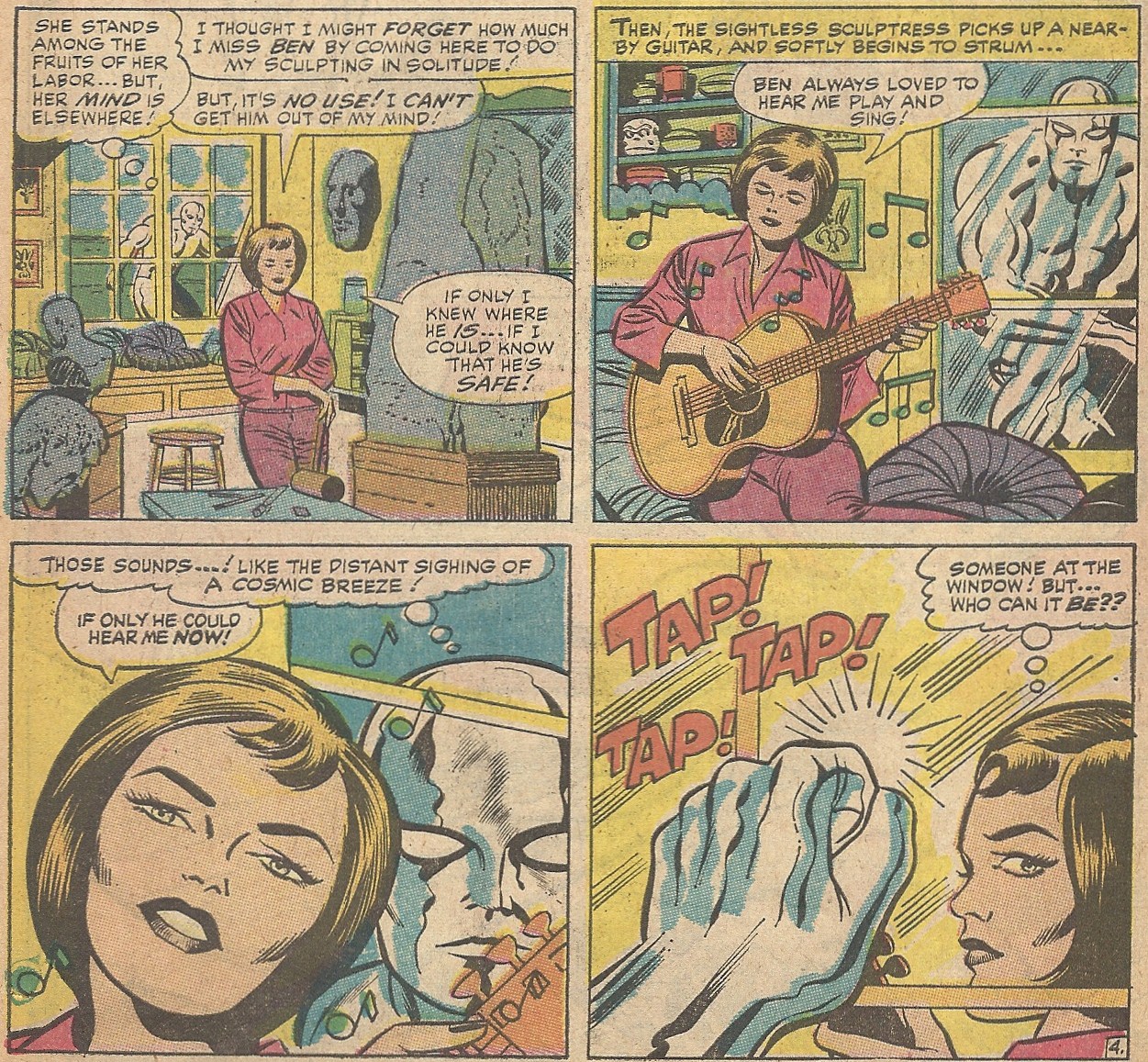
Hopefully he won’t pull a “Bluto” Blutarsky:
They bond, but when Ben comes over — and hears a man’s voice — he storms upstairs to Alicia’s room and catches her, well… :

Now, some might accuse Ben of overreacting. But think of it… You find your girl in her room with a man with a perfect physique stripped down to his briefs and she has her hands on his shoulders and chest. What would you do? “But she’s an artist!” you say. “Maybe she’s using him as a model.” Let’s let that imaginary conversation play out:
“Hey what’s going on here?”
“Why, Ben… What are you doing here?”
“What’s he doin’ here, that’s the question!”
“He’s simply modeling for me.”
“But you’re blind.”
“That’s why I’m using my hands.”
I think we’d still have the same result.
In the subsequent brawl, the Surfer reveals that he doesn’t really have the requisite tact to assuage Ben’s fury:

Yeah. Calling him a child is sure to help soothe the savage beast. And “ZIT!”? Get the Stridex!
Finally, after flinging boulders and hurling atomic blasts and dropping buildings on one another, Reed and Sue show up, grab these two by the scruff of their necks and give them (mainly Ben) a stern talking to:

Once they’ve all kissed and made up the Surfer surfs off, but not before leaving a parting gift for our rock-encrusted hero:

To quote Seinfeld, “That’s gold, Jerry, GOLD!”
When I was growing up I couldn’t have cared less about the Fantastic Four, both as a team and as a comic. “The World’s Greatest Comic Magazine” my a$$. But in recent years, as I’ve grown more acquainted with Marvel’s first family, I’ve come to understand what all the fuss was about. The dynamics were wonderful, the art was electric, and the revolving door of characters always kept the series (back then) fresh.
Hey, Lockjaw was in this issue too! That’s a sign of quality — when you can sing a book’s merits and not even bring up the wonder that is a giant dog with a tuning fork on its head. Excelsior!
??? – The Batman Magic Photo Kit
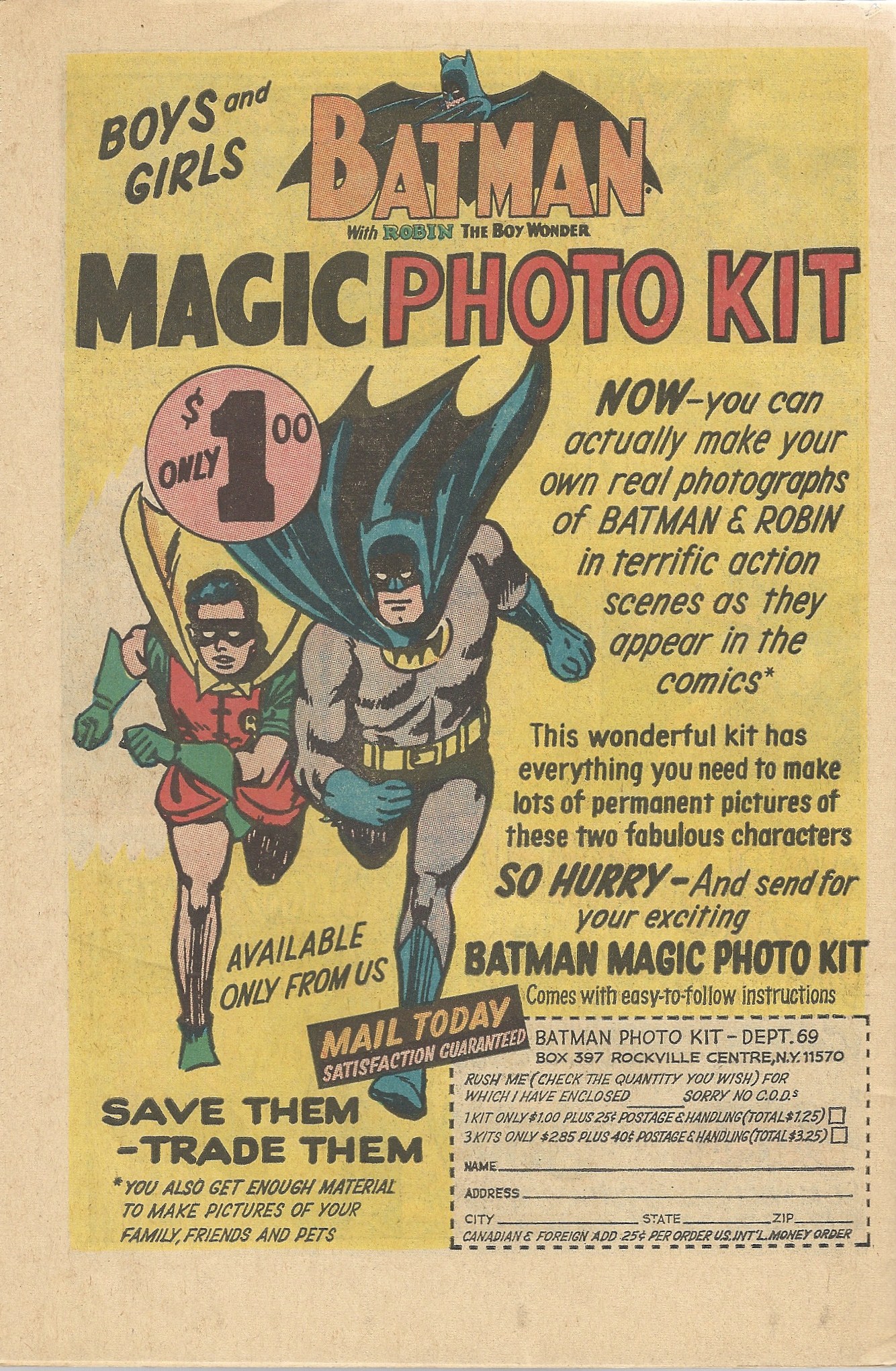
Did anyone out there ever actually own one of these? I pulled this ad out of an old Silver Age book and then did some perfunctory research on the web, but I wasn’t able to find much of anything about this “Photo Kit.” I’m just wondering what they heck it was. For some reason I’m picturing one of those PAAS Easter egg decorating kits, but with pictures. I’m likely way off base with that. Or maybe you could paste Batman and Robin onto family photos crazy-stalker-Single-White-Female-style. Again, I’m likely wrong.
What was it?
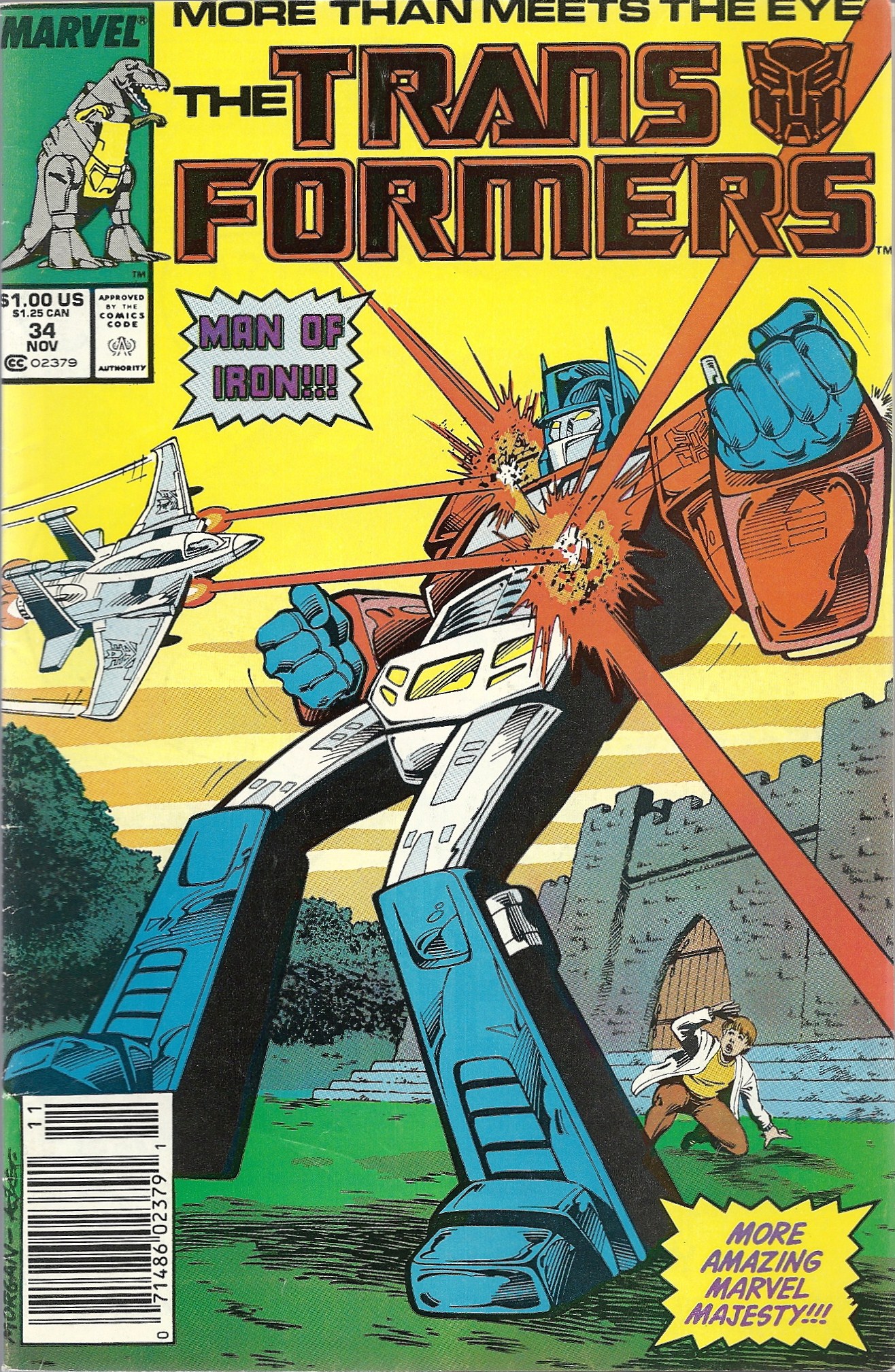
So we’re back for the second installment of the U.K. Transformers import, “The Man of Iron.” In the last issue there were some weird doings at an old castle, and a young boy, Sammy, was surveilled by the Autobots and then apparently kidnapped by one of them.
Here’s Sammy, behind the wheel of Jazz, and on the right side of the car, I might add — hey, this story really does take place across the pond!:
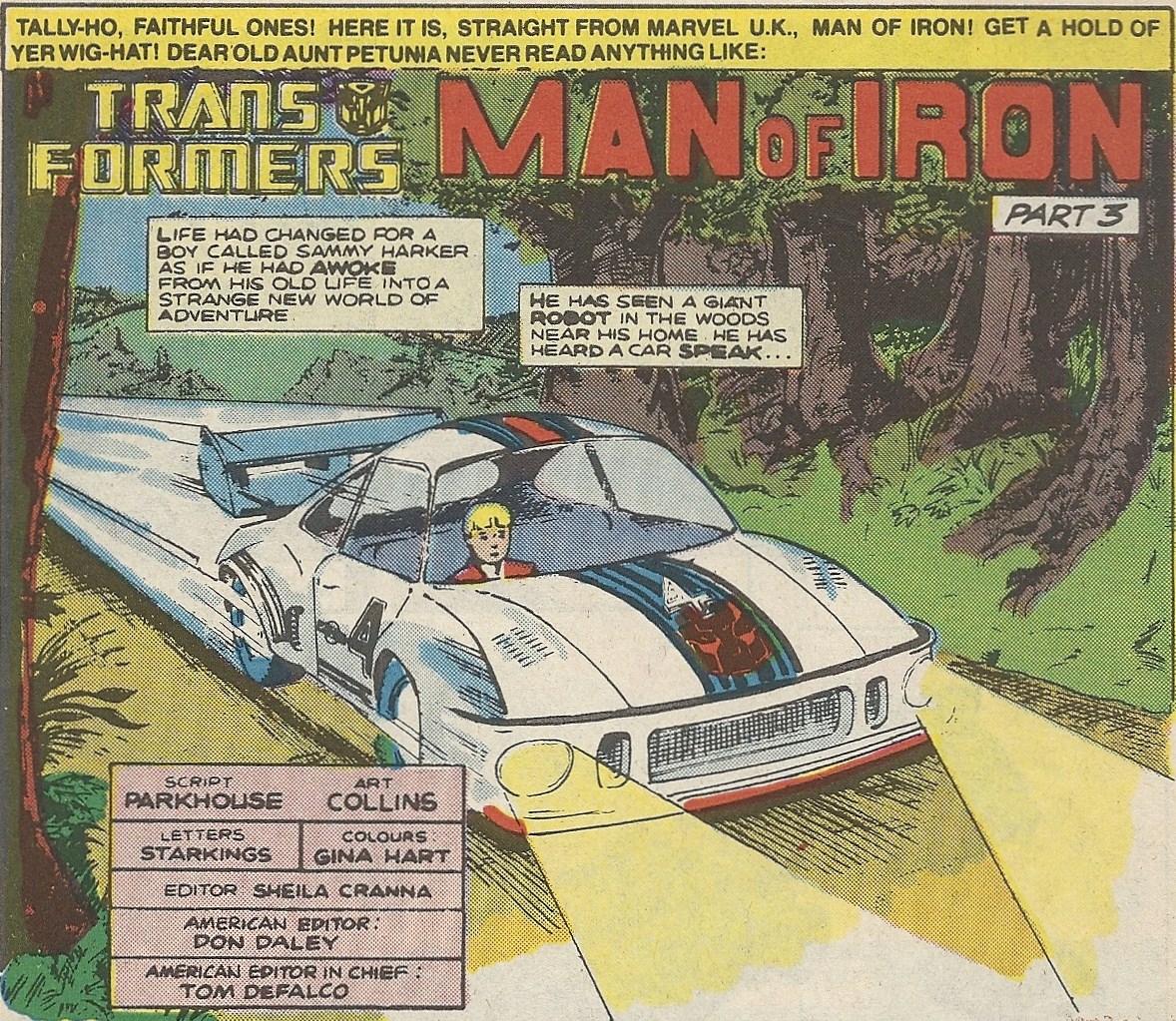
The action starts quickly. Jazz assures Sammy that he means him no harm and then joins up with a convoy of his fellow Autobots, but they’re all soon attacked by a squadron of Decepticons. They manage to avoid and defeat them with some nifty driving and some well-timed firepower:
With that taken care of, Jazz takes Sammy to a secluded spot in the woods. Uh-oh… You can relax — that’s not where this one is going. There they meet up with the big boss man himself, Optimus Prime. Not only is Prime the head cheese, he’s also a font of backstory:
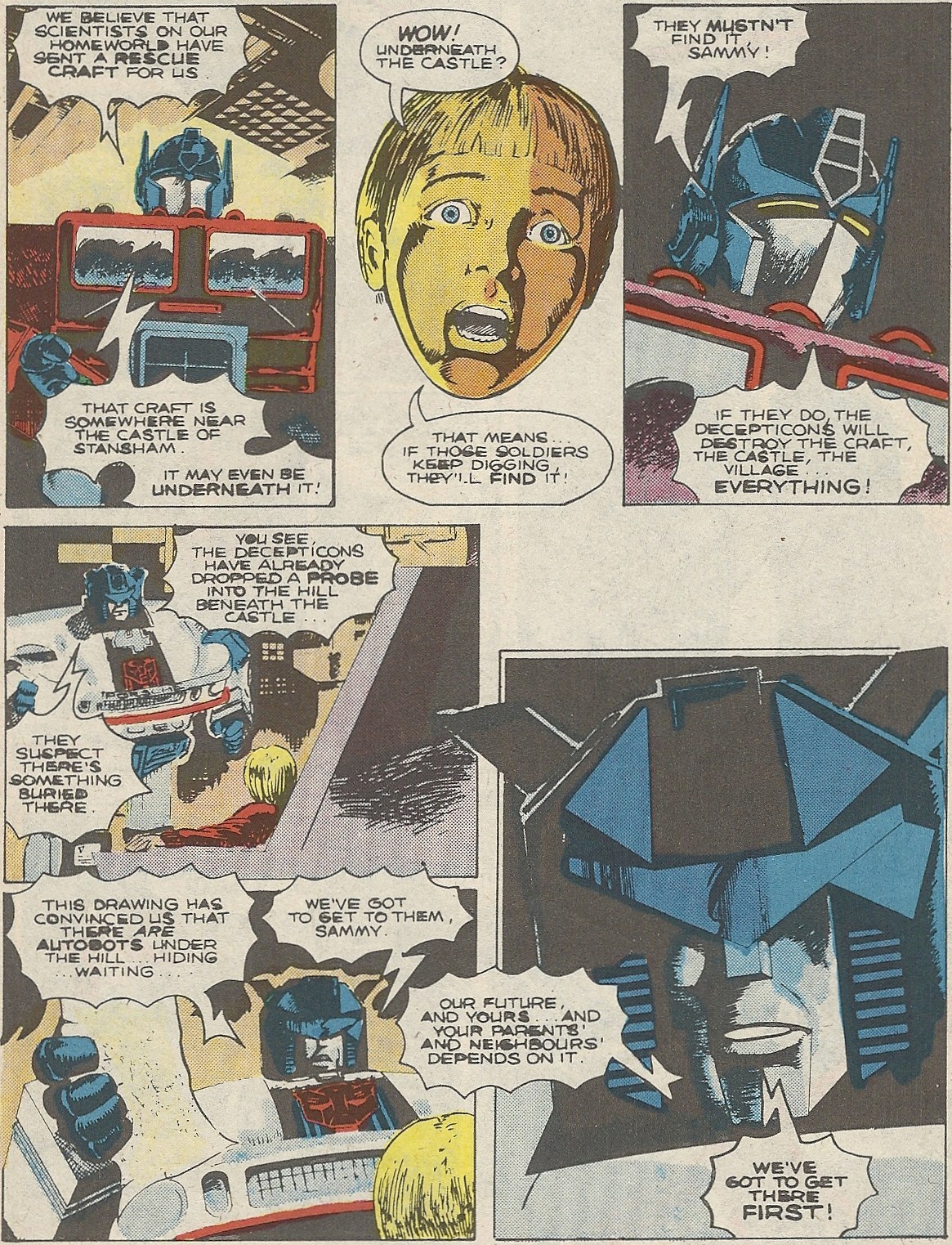
I’m not really clear on why the Decepticons would want to destroy this rescue craft. If the Autobots find it, would they leave? Would they really abandon Earth to the Decepticons? Wouldn’t the Decepticons want the Autobots to find the craft on the off chance that they would leave? Or wouldn’t they want to get it for themselves, maybe so they could go back to Cybertron and get some reinforcements and really get this conquest thing on the road?
I could go on and on, but maybe instead I should just let it go.
Meanwhile, at the castle, an excavation is underway. Sammy’s father is there trying to help out, though he’s a little distracted by, you know, his son’s abduction. You have to admire his devotion to duty. You really do. I’m not sure that I’d make it into work in the same circumstances.
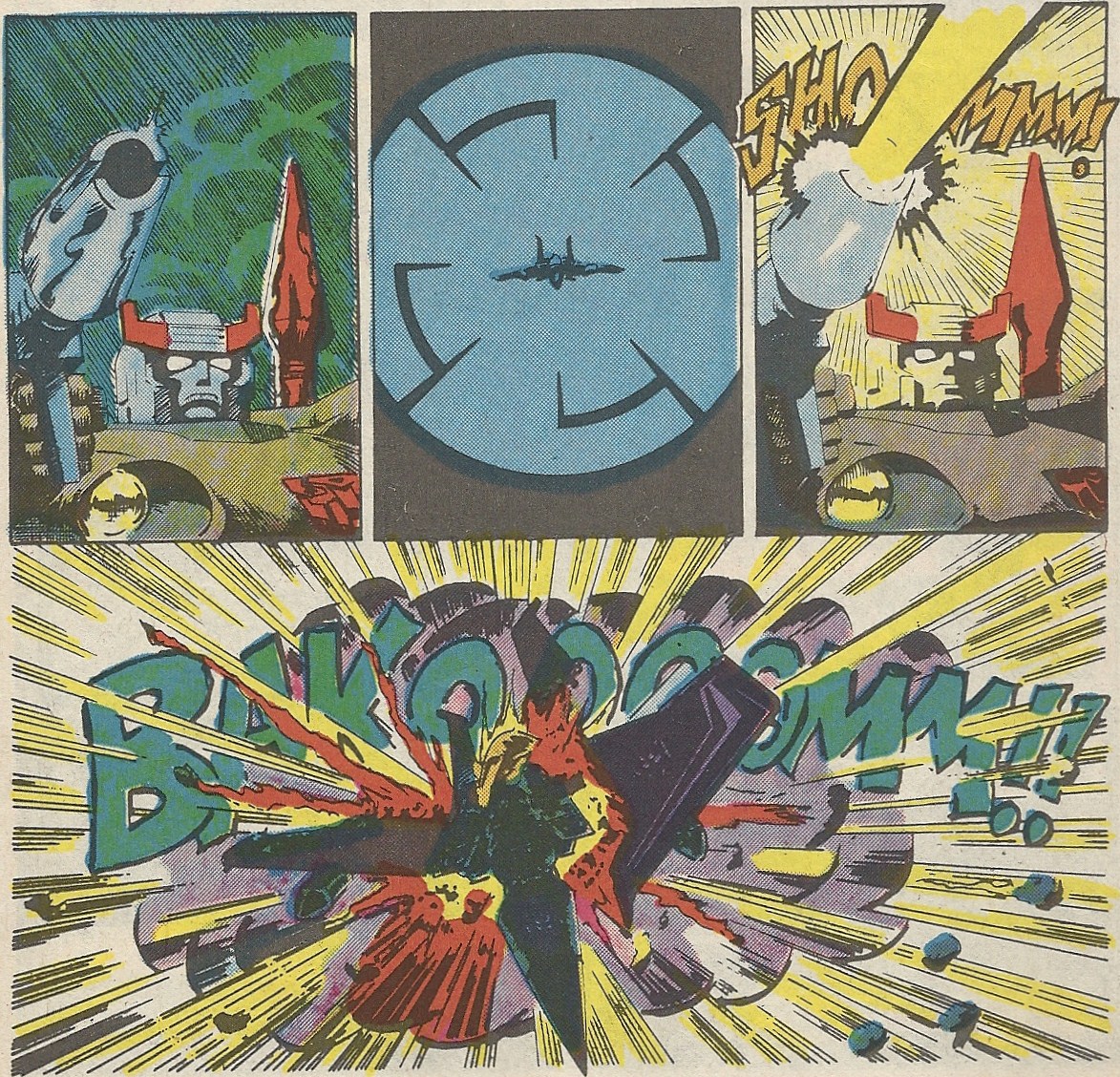
There’s not much time for him to mope, though. Soon there’s some rumbling and rattling and a certain somebody shoots up out of the ground:
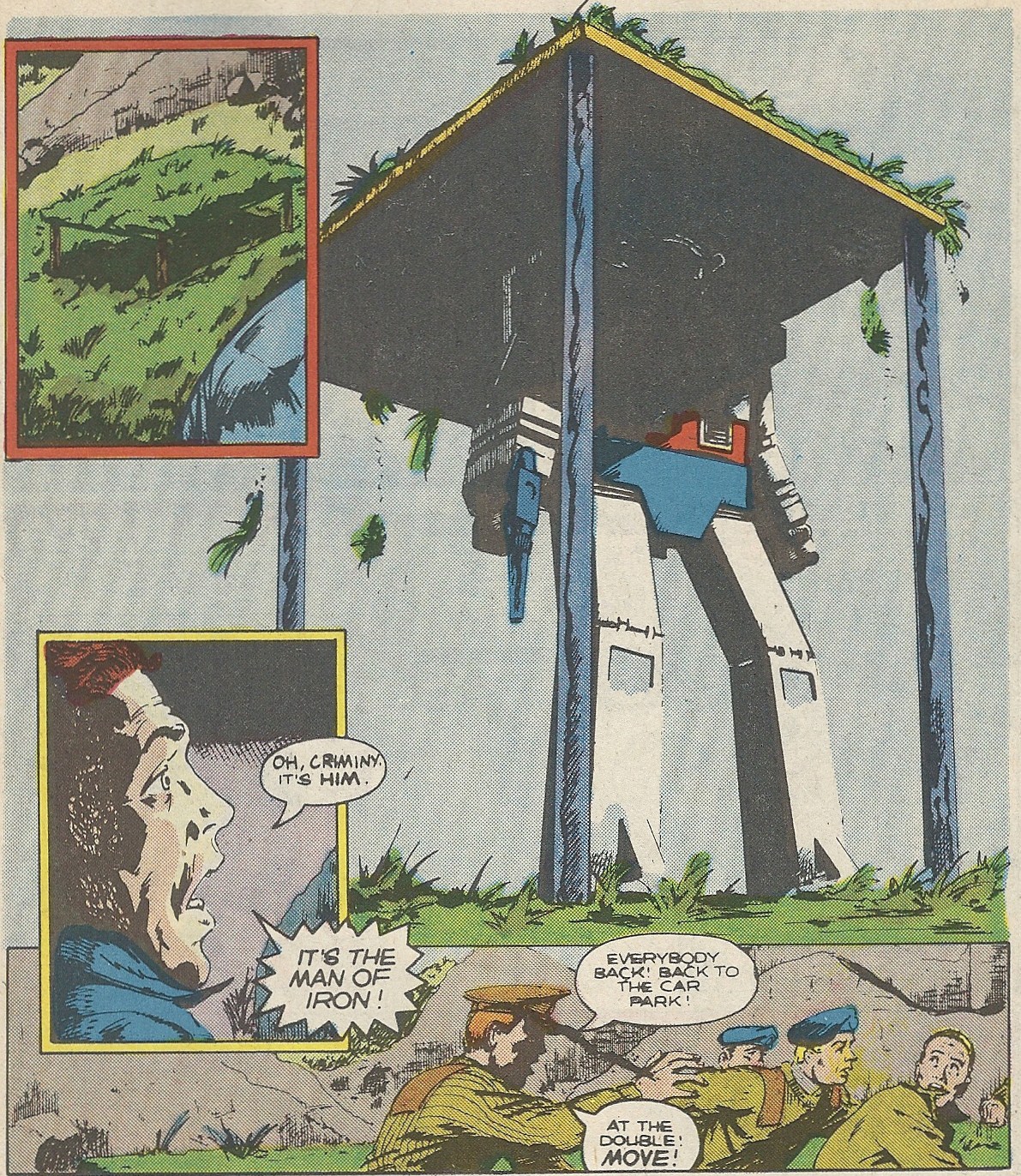
The Man of Iron doesn’t say a word and starts firing at members of the British Army. Then, as if on cue, Starscream shows up and pokes a big hole in the Man of Iron’s appellation:
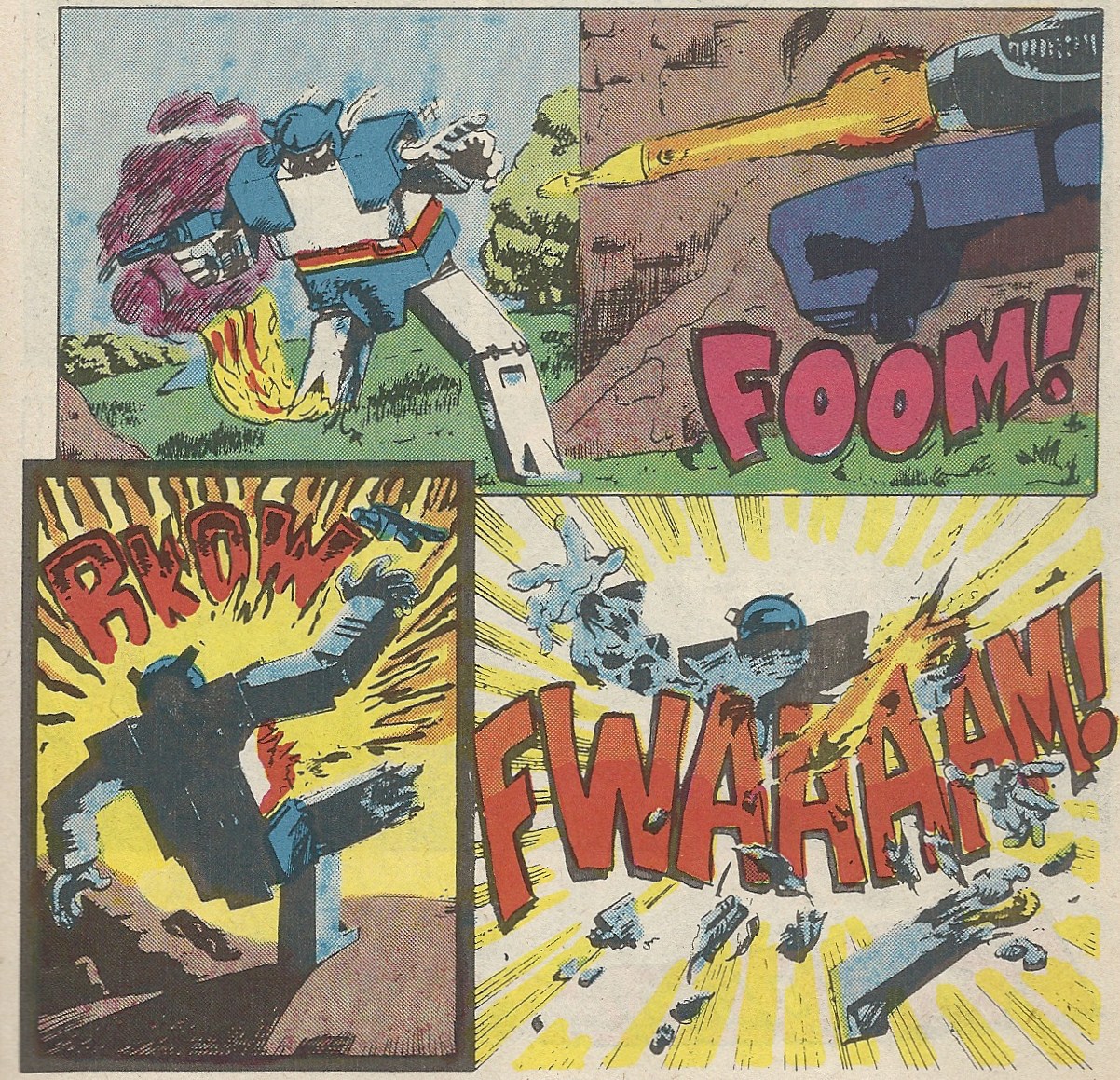
So one (okay, two) shot(s) from a fellow Transformer makes him crumble like a house of cards? Perhaps “Man of Balsa Wood” would be more accurate. Or “Man of Rice Cakes.”
The Autobots and Decepticons then square off in a battle that would probably come off better on a screen than on a page, and in the end good triumphs over evil. Sammy and his father are reunited, and Jazz and Prime ponder what to do with the rescue craft beneath their feet. They decide that it can’t be left intact because they can’t leave Earth with the Decepticons running amok (Why does that mean that they have to destroy it? I ask). Little do they know, the Man of Balsa Wood Iron wasn’t the only occupant of the craft:
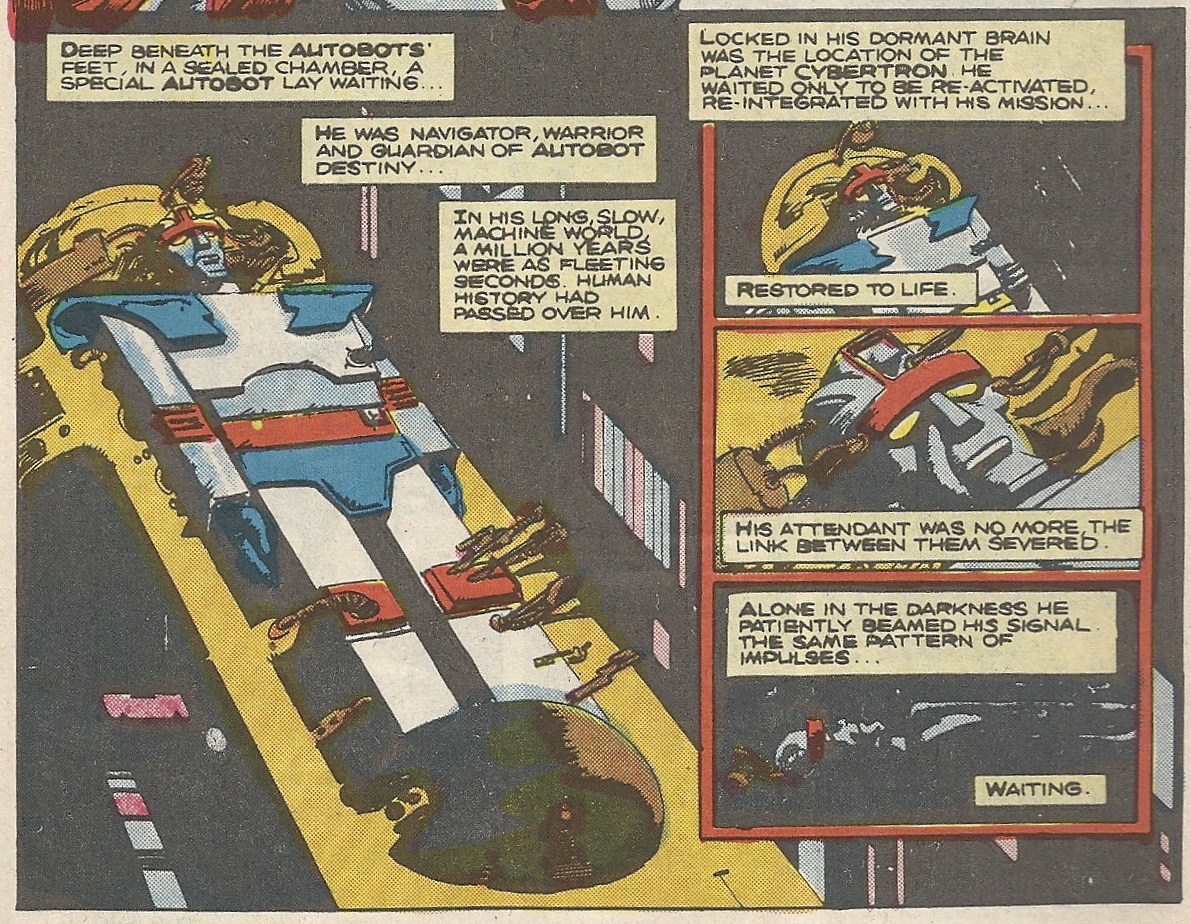
Jazz blows the whole thing to bits in what isn’t the best example of due diligence that I’ve ever seen.
A melancholic coda ends the story:
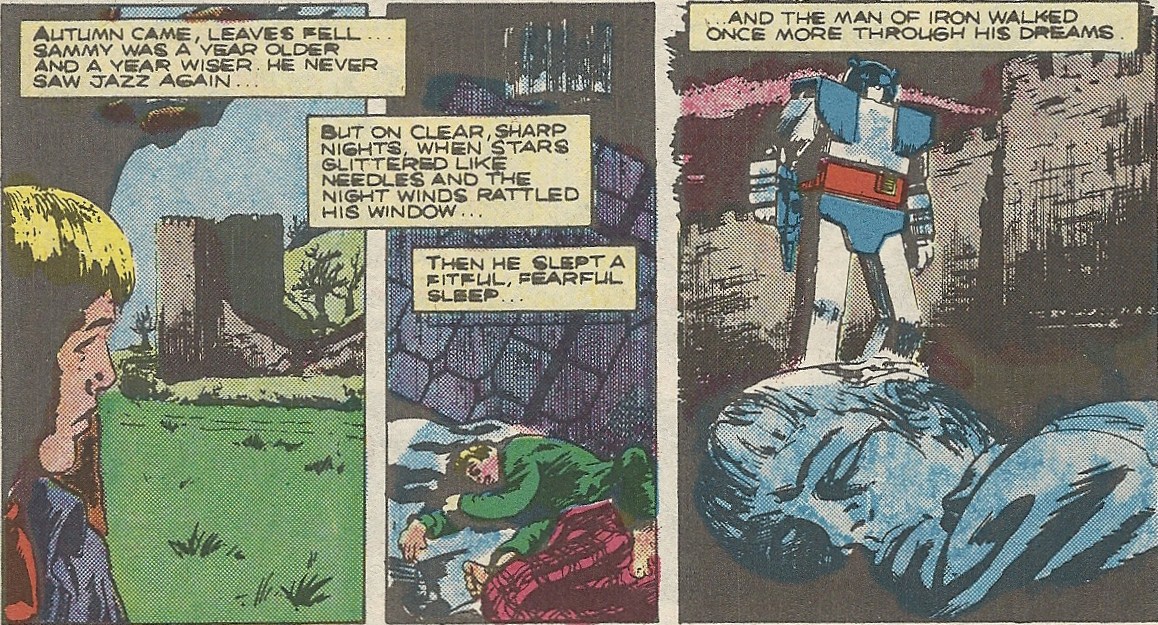
Okay. There are some gaping holes in this plot. I’ve already pointed out the amorphous and maddening motivations for the Autobots/Decepticons wanting to find/destroy the rescue craft. There’s that. Maybe the biggest one is this — there’s no real reason for Sammy to be in this story. It wasn’t like he had some mystical information imprinted on his brain. When they get him to the woods all that they do is ask about the legends of the Man of Iron. The purpose of his presence was just to have a kid in the story that kids like me could identify with. I’ll say this for that ploy — it was an effective device back in the day, and gave the story what I’d in later years think of as an Iron Giant vibe (you know, E.T. but with metal):
Now the whole thing gnaws at me and activates some sort of literary O.C.D. They didn’t really need the kid.
Still, it’s a memorable moment in the title’s run, something different and new in a comic where novelty often meant that the writers were cramming in new characters as ads for the new line of toys. I’m not as nuts about the action of the second issue, but the quiet, pensive moments in the first are quite nice. And I really like those final few panels — I sometimes wonder if Sammy still dreams about Jazz and the Man of Iron.
When I want to take a trip down memory lane with some Transformers action, these two issues are usually the ones that I grab. Maybe that’s the best thing that I can say about them.
Surely our cool team jackets will save us! – Blackhawk #226

I always associated Blackhawk with his more formal looking pilot attire — I never knew that he and his team wore flashy jackets that would make Marlon Brando proud:
Nor did I realize that the Blackhawk Squadron had an ethnically diverse (in a European-y sort of way) roster, with a token Asian stereotype to round out the cast:

Color me enlightened.
“The Secret Monster of Blackhawk Island” is brought to us by France Herron, Dick Dillin and Charles Cuidera. The Blackhawks foil a bank heist by a costumed villain and take his goofy helmet as a trophy:

It turns out that’s just what the crook (The Planner is his name, btw) wanted them to do, as we learn when he returns to his hideout and confers with his Coke-bottle-spectacled partner:

Once the helmet is up on a shelf on Blackhawk Island, the villains flip a switch and trigger all kinds of mayhem, with the weapons and devices that the Blackhawks have taken as souvenirs coming alive and running wild. In the confusion an imprisoned beast is freed:

The thing rampages all the way to the Planner’s hideout in the very definition of a “backfiring plan,” and the fight soon spills onto the streets above:

Hey, The Fantastic Four #1 wants its cover back!
Fortunately a couple of aliens show up to save the day and deliver a bewildering explanation for our edification as to why this monster was on Blackhawk Island in the first place:

Where do “Nothing-Mass” and “Anti-Nothing-Mass” fit into God’s plan for us? I don’t know and I don’t care.
And that’s the end of the story. Apprently Blackhawk Island was put back in order, but no word on the untold damage inflicted on the city streets by big ugly Ulla.
The backup story, “The Mystery Prisoner of Stalag 13,” details an attempt by the Blackhawks to rescue a valued scientist from Nazi clutches. They use some trickeration to sneak one of their members into the prison camp:

The rescue plans get all fouled up with counter-plots and counter-counter-plots, and I won’t regale you with the details. The Blackhawks, with their “HAWKA-A-A” battle cry and their enormous Jay Leno chins, save the day in the end:

I wasn’t nuts about either of these stories. For some reason I always pictured Blackhawk and his men as having more … what’s the word I’m looking for? Dignity. Yeah, dignity. There’s a lot of flopping around in silly action here, though the second story is a better fit for them. The monster in the first story would seem to be something more appropriate as a foe for the Challengers of the Unknown. I suppose the sci-fi elements were an attempt to keep the series relevant, and there are only so many World War II stories that can be told. The title didn’t last all that long after this issue, so I guess these attempted solutions didn’t ameliorate the problems. I’m not surprised.
The Blackhawk concept may have run out of gas, but you can’t get too mad at a character that once had his own neato movie serial (one that was mercifully devoid of “Chop-Chop”):
Hey, that’s Superman playing Blackhawk! I feel like I just unearthed an ancient crossover or something.

When I bought this comic several weeks ago I went in with the full knowledge that it was stuffed with reprints (Spidey’s origin, a summary of his powers, how his webspinners work, etc.), all from the able hands of Stan Lee, John Romita, and Steve Ditko. Fine. Whatever. But it’s a 1979 Spider-Man comic from a detergent company, so why not add it to the Blog into Mystery archives?
It was only after I got it home that I did a double take of the cover. I had thought that it was just a reprint of Ditko’s cover to The Amazing Spider-Man Annual #2 — I saw the poses, the headshot, the yellow background and even the black band a third of the way down and just assumed that that was what it was. I guess my eyes just passed right over it without really taking a closer look. Since you’re probably more observant than me you’ve realized that it’s actually a tribute to that earlier image. Here’s the Ditko original:

I’m not sure of the artist on the tribute. Romita perhaps. Whoever drew it, it looks like he has Spider-Man humping his own right eye. Just an observation.
A few thoughts about the All comic itself… I’m a little uncertain as to the mechanics of procuring this book back in the day. The cover says that it’s free with any purchase of Concentrated All, yet the comic has a price of 40 cents. Could you buy this? Were they handed out at cash registers when your All went across the checkout counter? Did you have to mail in for it? Or maybe a mysterious man in a dark suit and dark sunglasses showed up at your house, weeks after the detergent had been purchased and long after you had forgotten about the whole damned thing, handed you the comic and said “Don’t ask questions, just take it.”
I don’t know what the answer is, and I’m too lazy to sift through Google to find any answers.
I’m a little sad that this comic doesn’t have a themed story inside, like the Child Abuse and Minorities in Engineering giveaways that I’ve highlighted in the past. This means that we’re not treated to Spidey combating foes like grass stains and grape juice spills this time around. Oh well. At least there’s some Spidey-themed merchandise from All advertised on back cover:


I’d take the markers. Rockin’.
 Jared
Jared


 blog into mystery